
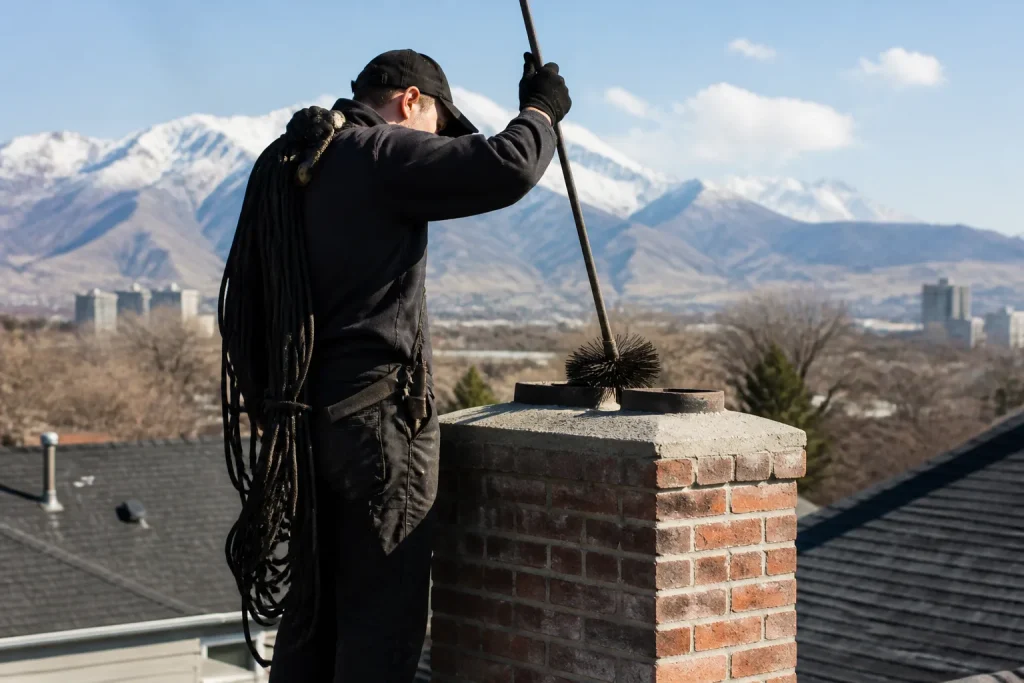
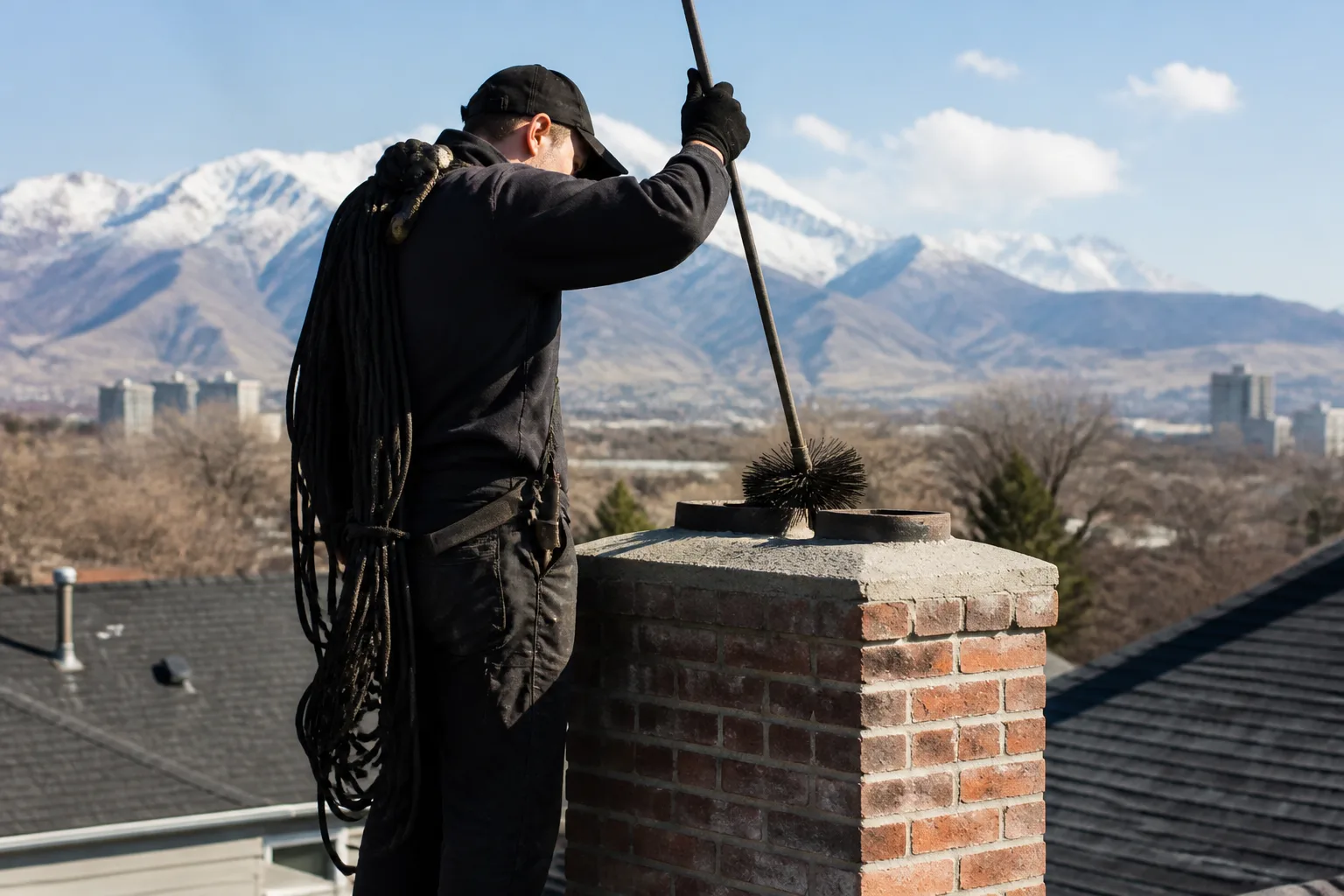
How to Choose the Right Chimney Cleaning Company in Provo
Most homeowners in Provo pick a chimney company the same way they pick a plumber: whoever answers the phone first and quotes the lowest number. That works fine for a clogged drain. It doesn’t work for a chimney, because the wrong brush on the wrong flue can score a stainless liner or crack a clay tile that was otherwise sound. CSIA certification is a baseline, not a differentiator. The real question to ask a Provo chimney company is what they do when their brush hits an unexpected offset at 15 feet.
If you’d rather have someone who’s seen your flue type before take a look, call (866) 937-8214 for a free estimate. Here’s how to vet anyone you’re considering, including us.
Why Equipment Variety Matters More Than You’d Think
A chimney sweep’s truck is the honest résumé. Standard polypropylene brush sets are the default in this trade, and they’re genuinely good for square masonry flues with straight runs. They’re the wrong tool for a lot of what’s actually installed in Provo homes: flexible stainless liners, oval flues, offset smoke chambers, and the angled breeching you find where a fireplace was retrofitted into an older house.
Here’s the practical problem. A rigid brush spinning through a flexible DuraFlex liner at the wrong speed or diameter can abrade the wall thickness. It doesn’t fail that day. It fails a few winters later, and by then nobody connects the liner pinhole to the sweep who caused it. Oval flues need oval brushes. Smoke chambers need hand tools and a mirror, not a rotary head.
So ask directly:
- “What brush types do you carry, and which one would you use on my flue?”
- “Do you service flexible liners, or masonry only?”
- “How do you clean an offset or a smoke chamber?”
A company that answers these without hesitating has done the work. One that says “we use the standard brush, it works on everything” has told you something useful. Our technicians have up to 10 years of experience, and the equipment question is the first one we ask ourselves before a chimney sweep in Provo gets scheduled.
What CSIA, NFI, and CDET Actually Cover
These three credentials get tossed around as if they’re interchangeable. They’re not, and knowing the difference tells you who you’re actually hiring.
- CSIA (Chimney Safety Institute of America) covers sweeping and inspection fundamentals: how creosote forms and grades, how to inspect without damaging components, how to recognize a hazard. It’s the most relevant credential for the cleaning side of the job.
- NFI (National Fireplace Institute) focuses on hearth appliances: wood stoves, gas fireplaces, inserts, venting. It matters when your question is about how the appliance vents, not just how the flue looks.
- CDET (Chimney Dryer Exhaust Technician) is specific to dryer vent systems and doesn’t apply to fireplaces at all.
For a routine cleaning, CSIA is the credential to look for. For repair or restoration work, the more useful question is what material system the company works with. Liner restoration with HeatShield, for instance, is a different skill set from installing a new DuraFlex liner, and not every sweep carries either capability. Inspection should be aligned with NFPA 211 standards, which is the baseline for identifying hazards before they become fires. A CSIA card alone doesn’t tell you whether the company can actually fix what they find.
The Interview Questions That Separate Specialists from Sweeps
You don’t need twenty questions. You need four, asked in this order, and you need to listen for whether the answer is specific or general.
- “What appliance do I have, and does it change how you clean?” A wood-burning fireplace, a gas insert, and a wood stove all vent differently and produce different deposits. A company that quotes a price before asking this is quoting blind.
- “Do you photograph inside the flue during inspection?” Camera documentation is the difference between “your liner looks fine” and evidence you can see. It also protects you from being sold work you don’t need.
- “How do you handle Stage 2 or Stage 3 creosote?” Stage 2 is glazed and stubborn. Stage 3 is the hard, tar-like layer that a standard brush skips right over. Proper removal takes chemical treatment or rotary tools, and the honest answer is “it takes longer and costs more.”
- “What’s your liner material compatibility?” If they can’t tell you whether their equipment is safe on stainless flex versus clay tile, that’s your answer.
In our experience, the companies that fail this interview aren’t dishonest. They’re generalists who added chimney work to a handyman or HVAC business and never bought the equipment for the hard cases. Provo has plenty of both, and the difference shows up the moment your flue isn’t a straight shot.
Red Flags Specific to Provo Homeowners
Some warning signs show up here more than elsewhere, usually because of the housing stock and how people heat.
- A quote without asking about your appliance. Wood versus gas changes everything: deposit type, brush selection, and whether a camera is needed.
- No mention of inspection. A cleaning without an inspection is half a job. You want to know the flue’s condition, not just that it’s empty.
- Repair recommendations with no photos. If someone tells you the liner is failing, ask to see it. If they can’t show you, don’t authorize the work.
- “Certified” with no specifics. Ask which credential. A vague answer is a non-answer.
- Prices quoted over the phone before anyone’s seen the flue. A firm number before inspection is either a guess or a sales tactic.
Provo’s cold winters mean fireplaces get used hard from November through March, and creosote builds faster than homeowners expect. That’s a reason to inspect before the burning season, not a reason to panic-buy a liner in July.
Cleaning Company vs. Full-System Chimney Specialist
A cleaning company sweeps the flue and leaves. A full-system specialist handles everything from the firebox to the flue cap, which means they can find a cracked crown, a failed cap, or a damaged damper during the same visit that started as a routine cleaning.
When is a sweep enough? If your flue is sound, your cap is intact, and you just need the annual cleaning, a competent sweep is the right call. When do you need a specialist? When the inspection turns up structural issues, when you’re considering liner restoration instead of replacement, or when you’ve got a fireplace problem that isn’t just deposit buildup. Liner restoration with HeatShield, for example, is a professional-grade alternative to full replacement that a basic sweep service simply can’t offer. That’s the moment the generalist hands you off and the specialist earns their keep.
Five distinct service categories matter here: sweep, inspection, fireplace repair, chimney repair, and cap and crown work. If a company offers only the first two, you’ll be coordinating multiple contractors the moment anything goes wrong. Catch it before it costs you.
When to Call a Pro
Call before you light the first fire of the season, not after something smells wrong. Call immediately if you notice a strong creosote odor in warm weather, staining on the chimney exterior, or a damper that won’t seal. Carbon monoxide is the quiet risk here: a blocked or cracked flue can push exhaust back into the house with no visible sign. If your carbon monoxide detector goes off, leave the house and call from outside. Do not run the appliance again until a technician has inspected the system.
Gas appliances and electrical components inside the firebox aren’t a homeowner troubleshooting project. Shut the unit down and let someone trained on it take over. If you’d rather not work out the diagnosis yourself, call (866) 937-8214 and we’ll get an inspection booked.
Related services in Provo: routine chimney sweep appointments, annual inspections, and cap and crown installation through Provo Chimney Sweep Pros.
The Bottom Line
The right chimney company in Provo is the one that asks about your appliance before quoting, carries equipment for flexible liners and oval flues, photographs what they find, and can actually fix the problem rather than hand you off. Price matters, but the cheapest sweep who cracks your liner isn’t cheap. Look for CSIA credentials for the cleaning side, concrete answers about creosote stages, and evidence you can see before any repair is authorized. Our technicians have up to 10 years of experience, and we work with DuraFlex and HeatShield because those systems hold up in a Provo winter.
If you’re in Provo and need help, Provo Chimney Sweep Pros offers free estimates. Call (866) 937-8214. We answer 24/7. Fast dispatch from 7am to 7pm, Sunday through Friday.
Frequently Asked Questions
Most chimney cleanings in Provo fall in the $150 to $300 range, with inspection often bundled in. Final pricing is set by a written estimate after the technician sees your flue type and deposit level. Call (866) 937-8214 for an exact quote. Estimates are free.
Restoration is often an option when the liner has isolated cracks rather than full failure. HeatShield restoration can extend a liner’s life at a fraction of replacement cost. Ask for photos of the damage before you decide. Call (866) 937-8214 to discuss what your flue actually needs.
Once a year for most wood-burning fireplaces, and more often if you burn heavily through the winter. Gas appliances still need annual inspection even though they produce less creosote. Call (866) 937-8214 to book before the burning season starts.
Creosote accumulates in layers, and Stage 3 creosote is the flammable kind that fuels chimney fires. A blocked flue can also push carbon monoxide back into the house. Both risks are preventable with an annual inspection. Call (866) 937-8214 for a free estimate.
Written by the team at Provo Chimney Sweep Pros.
Need Chimney Cleaning Help?
Call Provo Chimney Sweep Pros - the local pro we connect you with is licensed and insured, with free written estimates in Provo.
(866) 937-8214