
Top Signs You Need Chimney Cleaning Service – Don’t Ignore These
A white haze on your fireplace glass isn’t a cosmetic issue. It’s a byproduct of incomplete combustion, and it tells you what’s happening inside your flue before you can see it. Most homeowners wait for smoke in the room or a smell that won’t quit before they call. By then, the problem has usually moved past simple soot. Below we rank the real warning signs by urgency, explain what’s physically causing each one, and separate the symptoms that mean “schedule soon” from the ones that mean “don’t light another fire.” If you’d rather not sort it out yourself, call (866) 937-8214 and we’ll take a look.
How Do You Know Your Chimney Needs Cleaning?
You know your chimney needs cleaning when a normal fire produces symptoms you can see, smell, or hear: smoke drifting into the room instead of up the flue, a strong creosote or campfire odor even when the fireplace is cold, a black oily film on the firebox walls or glass, or a flue that’s visibly coated in more than a thin dusting of soot. A routine annual sweep is preventive. These signs mean something has already changed in how the system is drafting or how much fuel is depositing on the flue walls.
The tricky part is that chimney problems are patient. Soot and creosote build quietly over a heating season, and the fire keeps burning fine right up until it doesn’t. In Provo, where winter burning is heavy and the shoulder seasons swing hard between wet and dry, the inside of a flue can go from “due for a sweep” to “glazed and stubborn” faster than most people expect.
So instead of one vague checklist, here’s a severity-ranked version. Treat the first tier as a stop sign and the second as a calendar item.
Tier 1: Stop Using the Fireplace and Call a Specialist
These are the signs that mean don’t light another fire until someone qualified has looked at the system. Each one points to a condition where the chimney can no longer do its job safely.
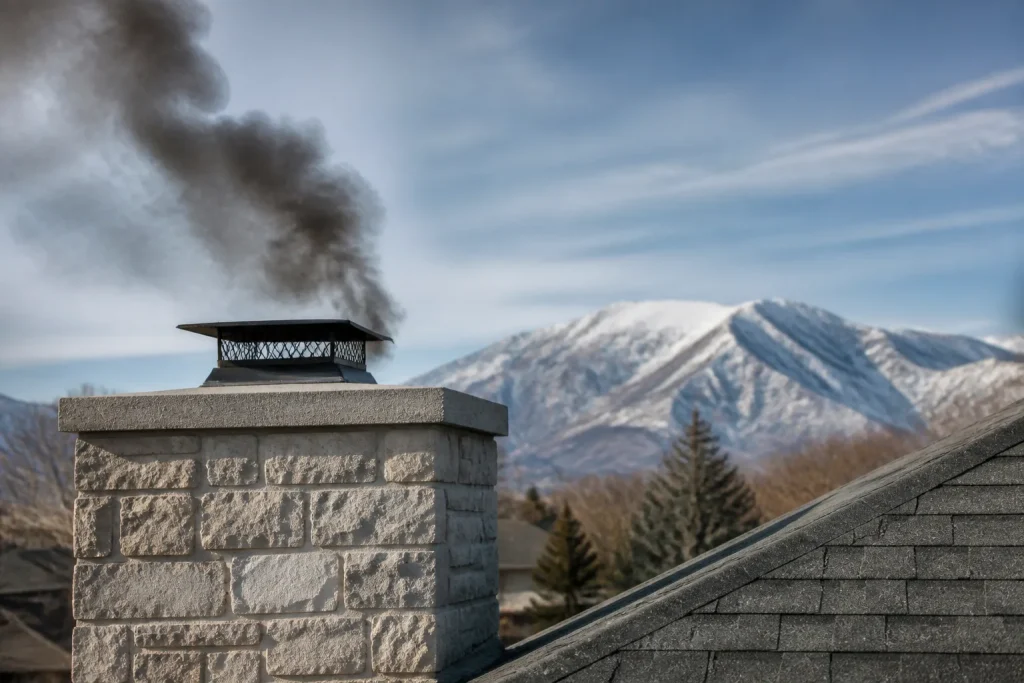
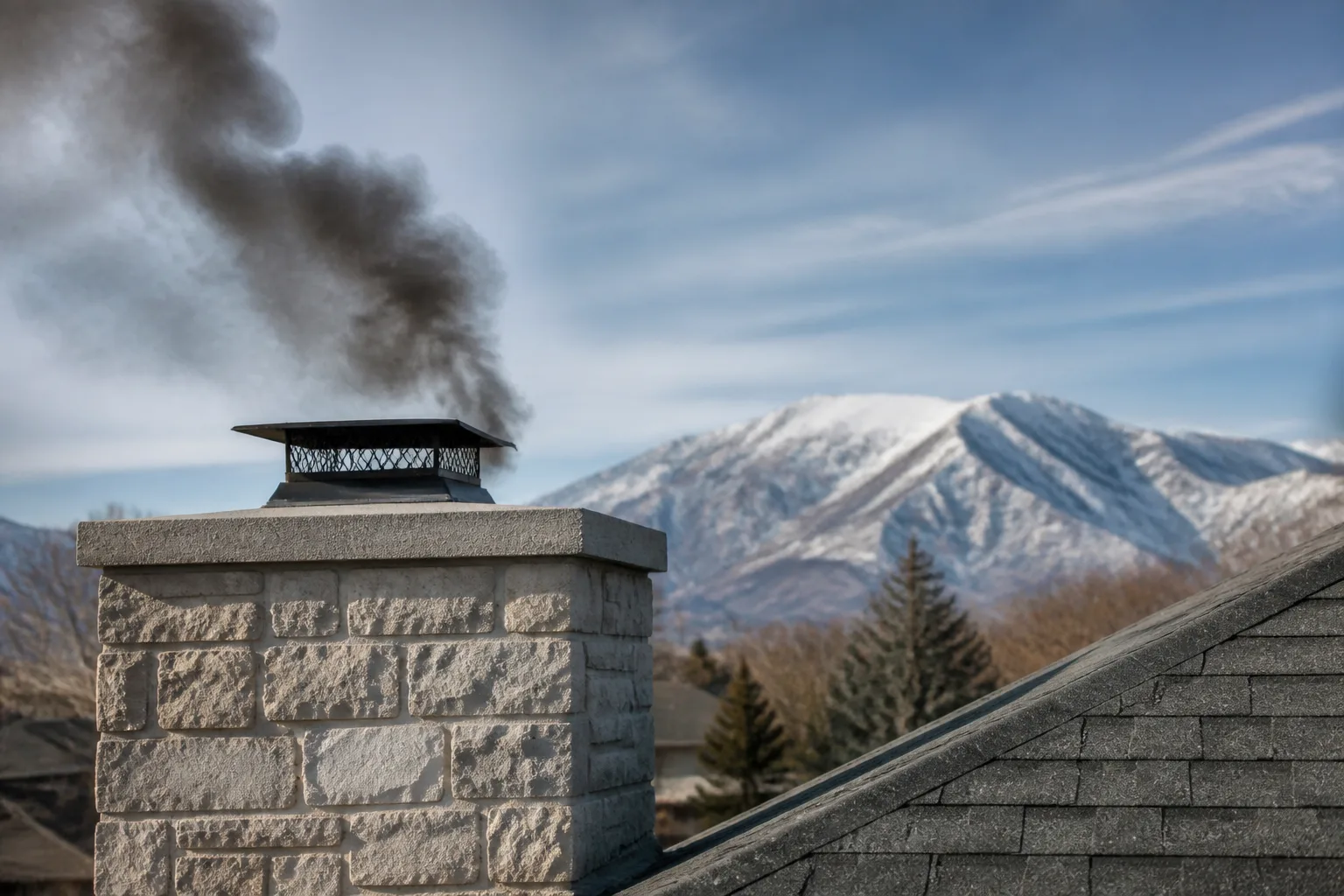
- Smoke rolling back into the room. A properly drafting chimney pulls smoke up and out. Rollout means the flue is blocked, undersized, or the pressure balance has flipped. A bird nest, a collapsed flue tile, or heavy creosote buildup can all choke the draft. Smoke in the living room is a draft failure, not a quirk of a cold morning.
- Oily black residue on the firebox walls or damper. That glossy coating is Stage 3 creosote, glazed and hard. It’s the most flammable form, and standard brushing won’t remove it. This is where remediation using a product like HeatShield or a DuraFlex liner relining comes in, not a quick sweep.
- Evidence of a previous chimney fire. Puffy, honeycombed creosote, cracked flue tiles, warped metal components, or heat-discolored parts on the cap. Many chimney fires burn out on their own and the homeowner never knows it happened. The aftermath is a structural problem even when the fire is out.
- A carbon monoxide alarm that keeps going off. Treat this as an emergency, get everyone outside, and call for help. A blocked or cracked flue can push combustion gases back into the home.
When a technician finds any of these, the visit shifts from cleaning to diagnosis: a camera inspection of the flue, a look at the crown and cap, and a clear explanation of what’s actually wrong before anything gets quoted.
Tier 2: Schedule a Visit Within a Few Weeks
These signs aren’t emergencies, but they’re not noise either. They mean the system is losing efficiency or trending toward a bigger problem, and a sweep plus inspection usually catches it while it’s still cheap to fix.
- A slow, lazy smoke draw. Fires that used to catch and draft well now smolder at the start. That’s usually a partial restriction, soot-thick flue walls, or a cap screen that’s clogged with debris.
- A faint smoky or campfire smell when the fireplace is cold. A little odor after a fire is normal. A persistent smell days later often means creosote is drawing moisture and off-gassing, or the flue has a small backdraft path.
- Visible soot flakes dropping onto the hearth. A light dusting is fine. A steady sprinkle of black flakes means buildup is shedding from higher up the flue.
- Glass that hazes white or blackens quickly after cleaning. White haze is condensed combustion byproduct; black streaks are unburned fuel. Both tell you the fire isn’t burning clean, and a dirty flue usually shares the blame.
If you’re seeing these, a chimney sweep with a camera check is the right first step. It’s a low-cost way to find out whether you’re in “cleaned and done” territory or heading toward a chimney repair conversation.
What Does Creosote Stage Actually Tell You?
Creosote is the tar-like residue left when wood smoke cools against the flue walls. How advanced it is determines whether a standard sweep fixes the problem or you’re looking at remediation. Knowing the three stages helps you understand what a technician is seeing.
- Stage 1: soot and light flaky creosote. A normal brush and vacuum clears it. This is routine maintenance territory.
- Stage 2: hardened, crusty deposits. Thick and bonded to the flue, often with a tar-like feel. Standard brushing won’t fully remove it. This is where specialized tools and, in some cases, a HeatShield restoration application come in to resurface and protect the flue.
- Stage 3: glazed, oily, glass-like creosote. Fuel-rich and highly flammable, and the hardest to remove. Left alone it’s the leading cause of chimney fires. Real remediation is usually required, and sometimes a liner replacement using a system like DuraFlex is the safer path.
That’s why “it’s been a year” isn’t a useful sign on its own. A lightly used fireplace could be Stage 1 after two seasons. A hard-burning one could be Stage 2 or worse after one Provo winter. The flue tells the story, not the calendar.
Why Provo Conditions Add Their Own Warning Signs
Provo’s climate stresses a chimney in specific ways that a general checklist misses. Cold winters mean heavy burning seasons. Spring moisture swings activate creosote and amplify odors. Warm months bring wildlife looking for shelter in an open flue.
- Strong spring odors. When the air warms, the moisture in creosote activates and off-gasses, which is why a chimney that smelled fine in January can turn sour in April. A sweep at the end of the heating season heads that off.
- Animals in warmer months. Birds, squirrels, and raccoons find an uncapped flue welcoming. A proper cap from a maker like Olympia Chimney or Copperfield blocks them out and keeps rain and debris from starting the whole problem over.
- Freeze-thaw spalling on the smoke shelf. Water seeps in, freezes, and flakes the masonry. Over time that chips away at the smoke shelf and crown, which is why we look at the cap and crown on every visit, not just the flue.
Our technicians have up to 10 years of experience reading exactly these patterns in Provo homes, and we cap and crown chimneys using proven materials so the fix holds through another winter.
What a Technician Actually Does When They Find a Warning Sign
This is where the difference between cleaning and remediation matters. A sweep-only visit ends when the brush comes out. A chimney specialist stays with the system.
- For soot and light buildup: a full sweep with camera inspection, then a report of what we found. Routine and quick.
- For Stage 2 or 3 creosote: specialized removal tools, and where the flue surface needs restoring, a HeatShield application. HeatShield can resurface a damaged liner and can spare you a full replacement.
- For draft failures: an inspection of the cap, crown, flue tiles, and smoke shelf, with a repair plan. Sometimes it’s a fireplace repair; sometimes the flue itself needs relining with DuraFlex.
- For water intrusion or spalling: crown and cap work using trusted components, so the masonry stops degrading.
A camera inspection and photo report come standard, so you see what we see. If your chimney is fine and just needs a sweep, we tell you that, and if the work can safely wait a season, we say so. We work with established materials including Olympia Chimney and Famco because the parts that protect your flue shouldn’t be a gamble.
When to call a pro
If you’re seeing any Tier 1 sign, stop burning and call today. For Tier 2 signs, book a visit within a few weeks rather than waiting for a chimney fire to make the decision for you. If you’d rather not climb on the roof yourself, that’s exactly why we’re here. Our technicians have up to 10 years of experience, and we’re specialists in chimney systems, not general contractors squeezing in a cleaning.
Related services in Provo: chimney inspection and fireplace repair are the usual starting points when a warning sign shows up.
The Bottom Line
Sort the signs by urgency. Smoke rolling into the room, oily black glazed creosote, or evidence of a past chimney fire mean stop burning and get a specialist in. A slow draw, a lingering smell, or falling soot flakes mean schedule a sweep and inspection within a few weeks. And the annual sweep matters because it catches all of this while it’s still simple. If you’re in Provo and need help, Provo Chimney Sweep Pros offers free estimates. Call (866) 937-8214. We answer 24/7. Fast dispatch from 7am to 7pm, Sunday through Friday.
Frequently Asked Questions
Once a year during your burning season is the standard starting point, and more often if you burn heavily or notice any Tier 2 sign. Because Provo winters drive steady fireplace use, an annual sweep paired with a camera inspection keeps creosote from reaching Stage 2 or 3. If you’ve never had it inspected, that’s the best place to start. Call (866) 937-8214 for a free estimate.
Light soot removal is within reach for some homeowners, but glazed creosote, flue damage, and draft failures need trained eyes and camera inspection. More importantly, working on a roof carries real fall risk. For anything past a basic sweep, hire a specialist. Call (866) 937-8214 for a free estimate.
White haze is condensed combustion byproduct, a sign your fire isn’t burning cleanly and your flue is likely dirty. Black streaks mean unburned fuel is depositing on the glass. Neither is cosmetic. Both point to a flue that needs a sweep and a look. Call (866) 937-8214 for a free estimate.
A brief smell right after a fire is normal. A persistent smoky or campfire odor when the fireplace is cold is not, and it usually means creosote is drawing moisture or the flue has a small backdraft path. Ignoring it lets the problem grow, and finding it early keeps the fix small. Call (866) 937-8214 for a free estimate.
Written by the team at Provo Chimney Sweep Pros.
Need Chimney Cleaning Help?
Call Provo Chimney Sweep Pros - the local pro we connect you with is licensed and insured, with free written estimates in Provo.
(866) 937-8214