
Last updated November 25, 2026
 Sweep & inspection
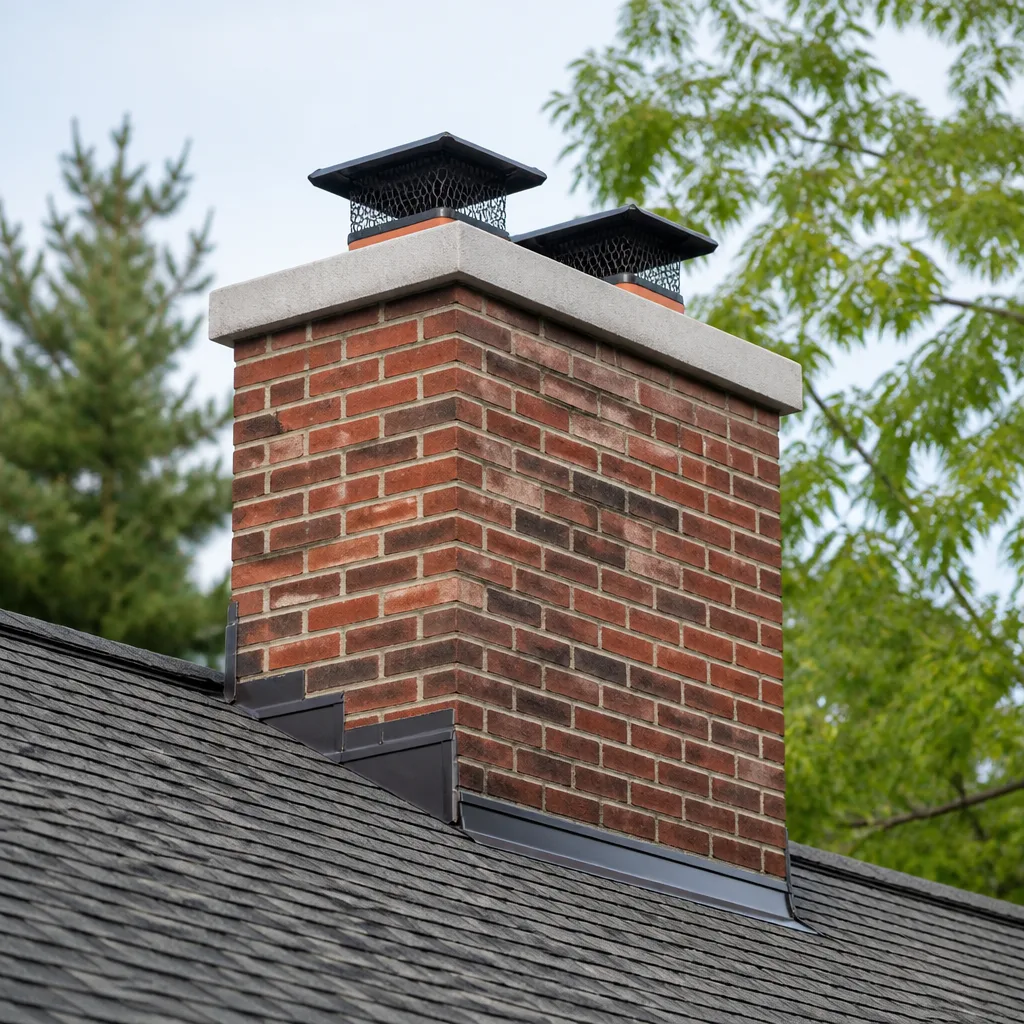 Caps & crowns
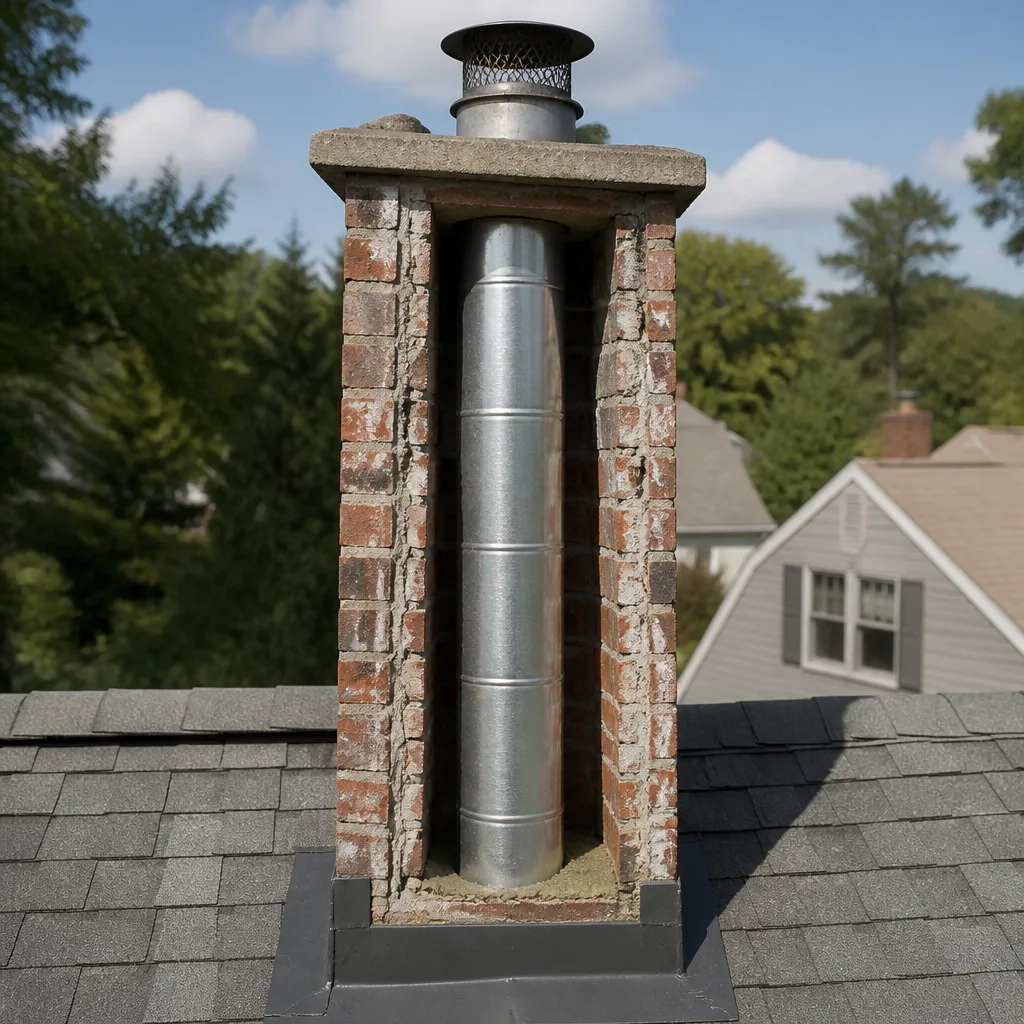 Flue relining
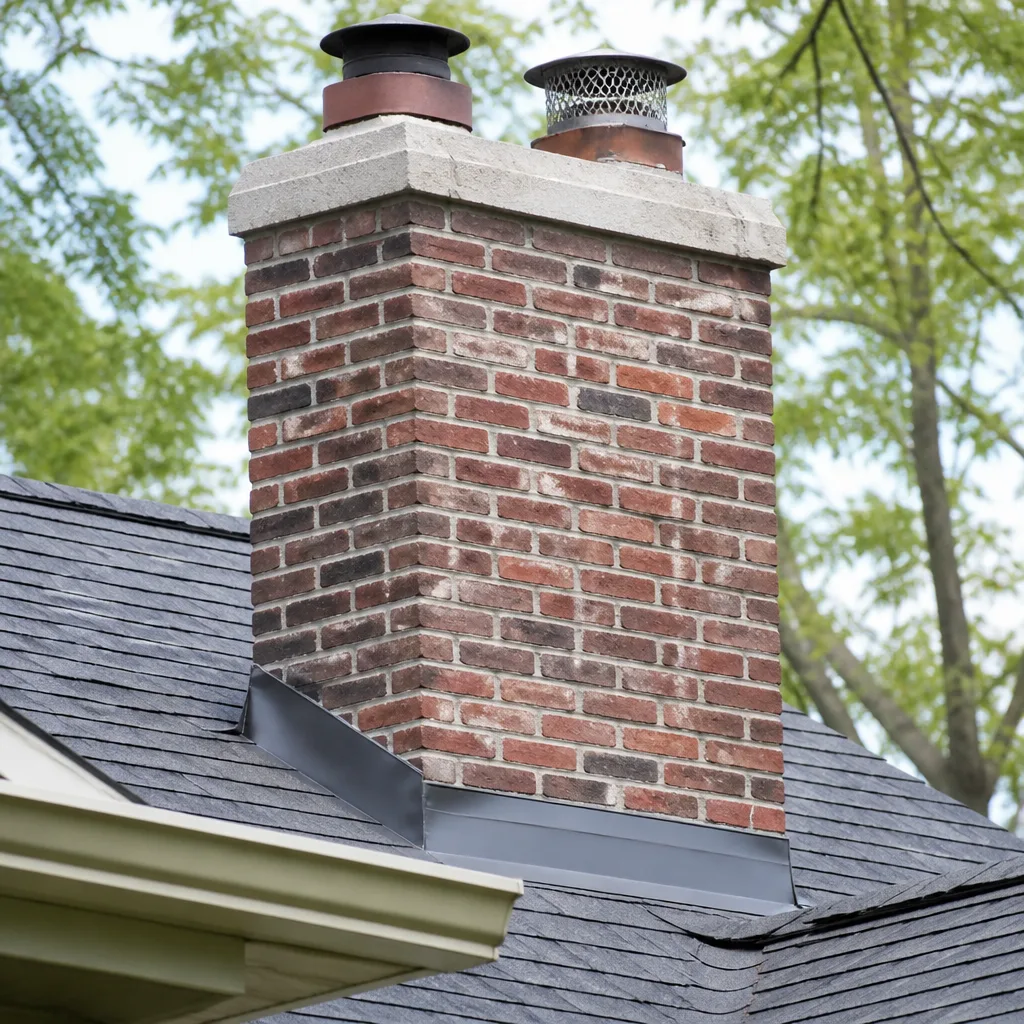 Masonry repair
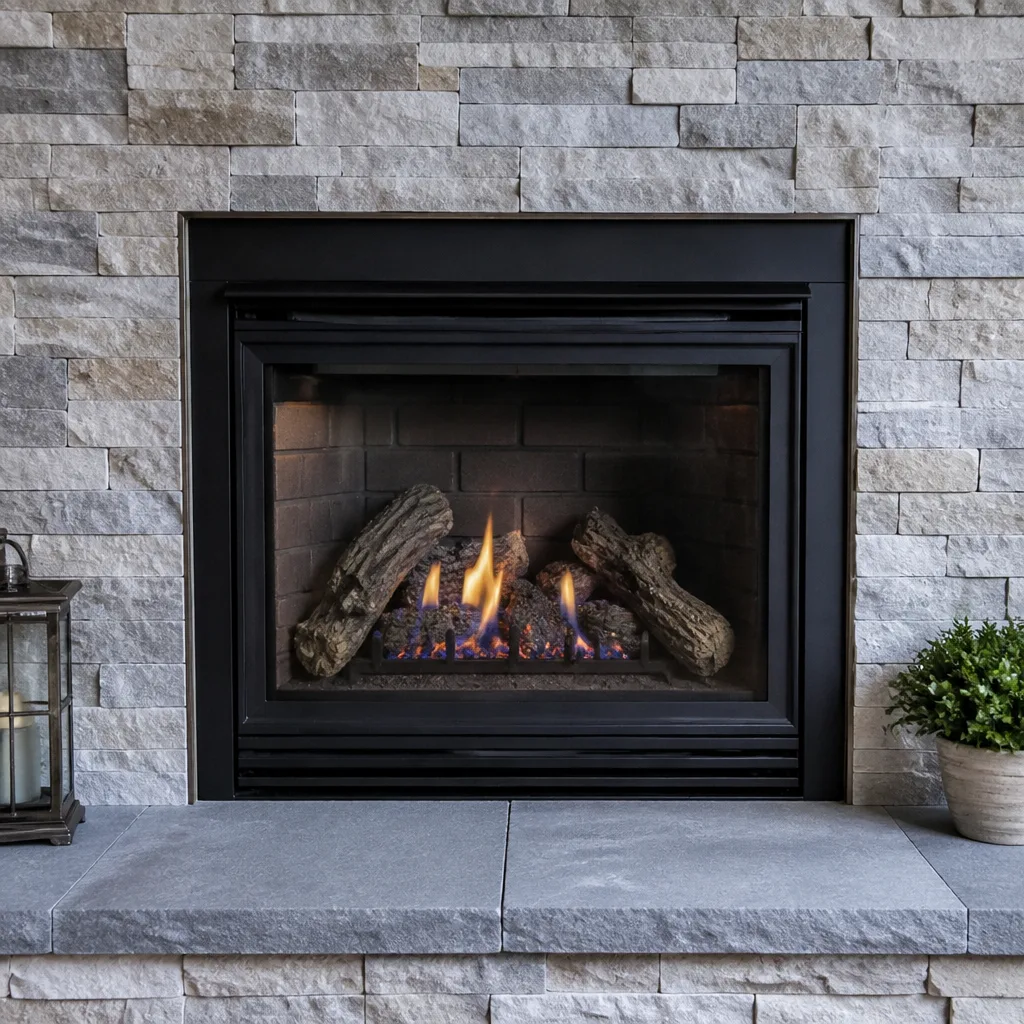 Gas fireplace service
Level 1 sweep and inspection to the NFPA 211 annual standard - flue, crown, cap, and flashing checked and photographed
Chimney sweep logs do not sweep chimneys. They loosen some creosote - which then falls where a brush and vacuum still have to collect it.
The Complete Guide to Chimney Cleaning in Provo
Most Provo homeowners who’ve had a chimney fire didn’t skip cleaning. They booked the wrong kind of cleaning. A basic sweep clears the flue, but it doesn’t tell you whether the liner is cracked, whether creosote has glazed into a third-degree shell, or whether the crown is quietly funneling water into your masonry. Those are the failures that start house fires, and they live one level below what a surface sweep can see. In this guide, we map the full chimney-cleaning decision tree for Provo homes: fuel type, liner condition, Utah Valley’s inversion season, and the inspection levels that catch what a broom never will.
Quick Answer
Chimney cleaning in Provo is a system diagnosis, not a single service. What your flue actually needs depends on three things: your fuel type (wood or gas), your liner material and condition, and how much third-degree creosote has built up over Utah Valley’s long inversion season. A proper visit pairs sweeping with at least a Level 1 inspection, and jumps to a Level 2 camera inspection if your system is older, has changed fuel types, or hasn’t been evaluated in years.
Styles & brands we work with
- Sweep & inspection
- Caps & crowns
- Flue relining
- Masonry repair
- Gas fireplace service
Table of Contents
- Why Chimney Cleaning in Provo Is Different
- How Inversion Season Accelerates Creosote Formation
- CSIA Inspection Levels 1, 2, and 3 Explained
- Why Gas Fireplace Flues in Provo Still Need Annual Cleaning
- HeatShield Resurfacing vs. DuraFlex Liner Replacement
- How to Read a Chimney Inspection Report
- What Actually Happens During a Provo Chimney Sweep
- Caps and Crowns: Protecting the Investment After the Cleaning
Why Chimney Cleaning in Provo Is Different
Provo sits in a bowl. The Wasatch Front traps cold air against the valley floor for days at a stretch during winter, and the result is a temperature inversion that holds wood smoke close to the ground far longer than it would in a flat, open climate. That reality shapes everything about how a chimney performs here. Smoke that lingers doesn’t get carried away; it cools against the flue walls, condenses faster, and lays down creosote at a rate that surprises homeowners moving to Provo from dryer or windier parts of the country.
The fuel mix matters just as much. Utah Valley has a large stock of homes with wood-burning fireplaces and inserts, alongside a growing number of gas-log and gas-insert installations. Each one fails differently. A wood flue builds creosote and needs regular sweeping. A gas flue builds moisture and sulfur deposits and needs cleaning even though there’s no visible smoke. Treating them the same is where problems start.
Housing age plays in too. Older Provo homes around the historic downtown grid and the tree-lined blocks near Brigham Young University often have original masonry chimneys with clay tile liners that have had decades of heating and cooling cycles. Newer construction in the foothills tends toward factory-built systems with metal liners. Both need attention, but they need different attention.
- Wood-burning systems accumulate creosote and require sweeping based on how much you burn, not the calendar alone.
- Gas systems produce water vapor and mildly acidic condensate that can attack a liner from the inside.
- Masonry chimneys in Provo’s freeze-thaw winters are vulnerable to cracked mortar, spalling brick, and water intrusion through a failed crown.
- Factory-built fireplaces have specific liner ratings and clearances that generic sweeps often fail to verify.
This is why we approach every Provo chimney as a complete system, from firebox to flue cap. Cleaning is the entry point; understanding what the flue is telling us is the actual job.
How Inversion Season Accelerates Creosote Formation
Creosote forms in three stages, and Provo’s climate pushes systems through them faster than most homeowners expect. Stage one is a light, flaky soot that brushes away easily. Stage two is a crusty, tar-like layer that clings to the flue walls. Stage three is glazed, hardened creosote that looks almost like a black glass coating and is highly combustible. A flue lined with stage-three creosote is a chimney fire waiting for a hot enough load of wood.
Why does Provo see stage-three buildup sooner? Three reasons stack up during inversion season:
- Cooler flues. When smoke lingers because outdoor air is cold and still, the flue stays cooler, and cool flues condense unburned gases into creosote instead of venting them.
- Longer burn cycles. Homeowners burn steadily through the cold months rather than in occasional bursts, and steady, low-temperature fires (especially with green or unseasoned wood) produce far more creosote than hot, efficient burns.
- Restricted draft. A partially blocked or poorly sized flue compounds the problem, trapping smoke and accelerating deposit formation.
The practical takeaway: in Provo, “once a year” isn’t a universal rule. A home that burns several cords per winter may need sweeping mid-season as well, while a gas fireplace that’s rarely used still needs an annual check because of condensation. That’s why we recommend a sweep based on the system’s actual condition, not a fixed calendar that ignores how you burn.
We’ve also seen that homes near the base of the mountains and along the eastern bench, where cold air settles hardest, tend to accumulate creosote differently than homes on more exposed lots. The point isn’t to guess. It’s to inspect and know.
CSIA Inspection Levels 1, 2, and 3 Explained
Not all chimney inspections are the same, and the gap between them is where house fires start. Aligned with NFPA 211, the standard that governs chimney inspections, there are three recognized levels. Knowing which one your Provo home needs is the single most important decision in the entire process.
Level 1 Inspection
A Level 1 inspection covers the readily accessible portions of your chimney and venting: the firebox, damper, accessible flue sections, and the chimney exterior. It’s appropriate when your system is under routine maintenance, you haven’t changed anything, and there’s no known problem. A Level 1 pairs naturally with an annual sweep on a system you already know well.
Level 2 Inspection
A Level 2 inspection goes further, including a video camera scan of the entire flue. It’s required after any change in the system: a new appliance, a fuel conversion (for example, wood to gas), a chimney fire, an earthquake, or a property sale. It’s also the right call for any Provo home whose chimney history is unknown, which covers a lot of first-time owners. The camera reveals cracks, gaps in liner joints, and hidden creosote that a surface look can’t reach.
Level 3 Inspection
A Level 3 inspection is diagnostic and may involve opening walls or removing components to access concealed areas. It’s recommended only when a Level 2 has identified a specific problem that needs hands-on access to evaluate. It’s the least common of the three and the most involved.
In our experience serving Provo homeowners, most unknown-history chimneys need at least a Level 2. A Level 1 alone is fine for a system you’ve maintained and know is sound, but it can’t tell you about the inside of a liner it can’t see. When someone asks for just a cleaning, we explain the difference clearly so they can choose with full information.
Why Gas Fireplace Flues in Provo Still Need Annual Cleaning
Gas fireplaces produce no visible smoke, so homeowners reasonably assume their flues stay clean. They don’t. Gas combustion creates water vapor, and in a lined, cooler flue, that vapor condenses on the walls. Over a Provo winter, this condensation can carry mildly acidic sulfur compounds that gradually attack a metal liner and leave a whitish, crusty residue. Left unaddressed, that residue can pit the liner surface and shorten the life of a factory-built system.
Gas systems also collect dust, lint, and spider webs near the vent termination, which can reduce draft and force combustion gases back toward the living space. That’s a carbon monoxide concern, not just a maintenance one. A properly functioning gas fireplace vents harmlessly; a partially obstructed one may not.
So the annual cleaning for a gas fireplace in Provo isn’t about creosote. It’s about:
- Removing sulfur and acid residue before it damages the liner.
- Clearing debris and insect nests from the vent termination and firebox.
- Verifying the flue still drafts correctly and the liner is intact.
- Checking the appliance and venting connections for corrosion or loose joints.
If you’ve converted a wood fireplace to gas logs, this matters even more. The original clay liner was sized for a wood fire; a gas appliance may vent differently, and the liner needs evaluation for the new fuel type. A Level 2 inspection after any conversion is the safe step.
HeatShield Resurfacing vs. DuraFlex Liner Replacement
When a camera inspection finds the liner is compromised, there are two very different paths forward, and the right one depends on what the inspection actually shows. This is where a sweep-only crew and a chimney specialist part ways.
When HeatShield Resurfacing Fits
HeatShield is a professional-grade liner restoration system. It’s applied to a structurally sound but deteriorated clay or masonry flue to create a smooth, sealed, insulated surface. The right conditions for HeatShield are a flue whose tiles are cracked or spalling but still present and stable, with no offset joints or missing sections. In that scenario, HeatShield can restore a safe flue surface without a full replacement, and it can save a significant amount compared to rebuilding the interior of the chimney.
When DuraFlex Liner Replacement Fits
When the existing liner is missing, offset, or so deteriorated that resurfacing can’t bond to a stable surface, a full liner replacement is the honest answer. A DuraFlex stainless liner system installs a new, rated flue inside the old one, restoring safe draft and proper venting. It’s the durable solution when the structure itself won’t hold a resurfacing.
Which Condition Triggers Which Repair
- HeatShield: cracked or spalling tiles, stable joints, a serviceably straight flue, no major structural loss.
- DuraFlex: missing sections, offset tiles, a flue that can’t safely contain a fire or a gas appliance, or a system being upsized or refueled.
- Full rebuild or masonry repair: compromised exterior structure, failed mortar, or a crown that’s directing water into the chimney body.
This is exactly the kind of judgment call that requires seeing inside the flue, not guessing from the top. We work with industry-trusted brands including HeatShield and DuraFlex precisely because the right answer changes with the condition, and we won’t recommend a full replacement when restoration is safe. The inspection evidence tells the story.
How to Read a Chimney Inspection Report
A good inspection report is a map of your chimney’s condition. A thin one is a warning sign. Here’s what a complete report should show you, and how to spot a surface-only sweep dressed up as an inspection.
What a full report includes:
- Firebox and damper condition, with photographs of any cracking, rust, or malfunction.
- Flue and liner assessment: the interior scan footage or still images, not just a verbal “looks fine.”
- Creosote stage identified by level, not a vague “needs cleaning.”
- Crown and cap condition, since both protect everything below them.
- Exterior, flashing, and masonry notes for water intrusion or spalling.
- Clear recommendations separated into what’s urgent, what’s soon, and what can safely wait.
Red flags that indicate a shallow, surface-only sweep:
- No photo or camera evidence of the flue interior, only a text summary.
- No mention of the crown, cap, or flashing.
- No creosote grading, just “cleaned.”
- Recommendations written as urgent across the board with no “safe to wait” category.
- No fuel type or liner material named, which means the technician never really assessed your system.
The single most important thing you can do as a Provo homeowner is ask to see the camera evidence for yourself. A chimney specialist will show you what they found, and give you a written estimate that sets the final price per job. You should never feel pushed into thousands of dollars of liner or masonry work you can’t verify.
What Actually Happens During a Provo Chimney Sweep
A professional chimney sweep is a controlled, tidy process, not a cloud of soot in your living room. Here’s how it typically goes for a Provo home:
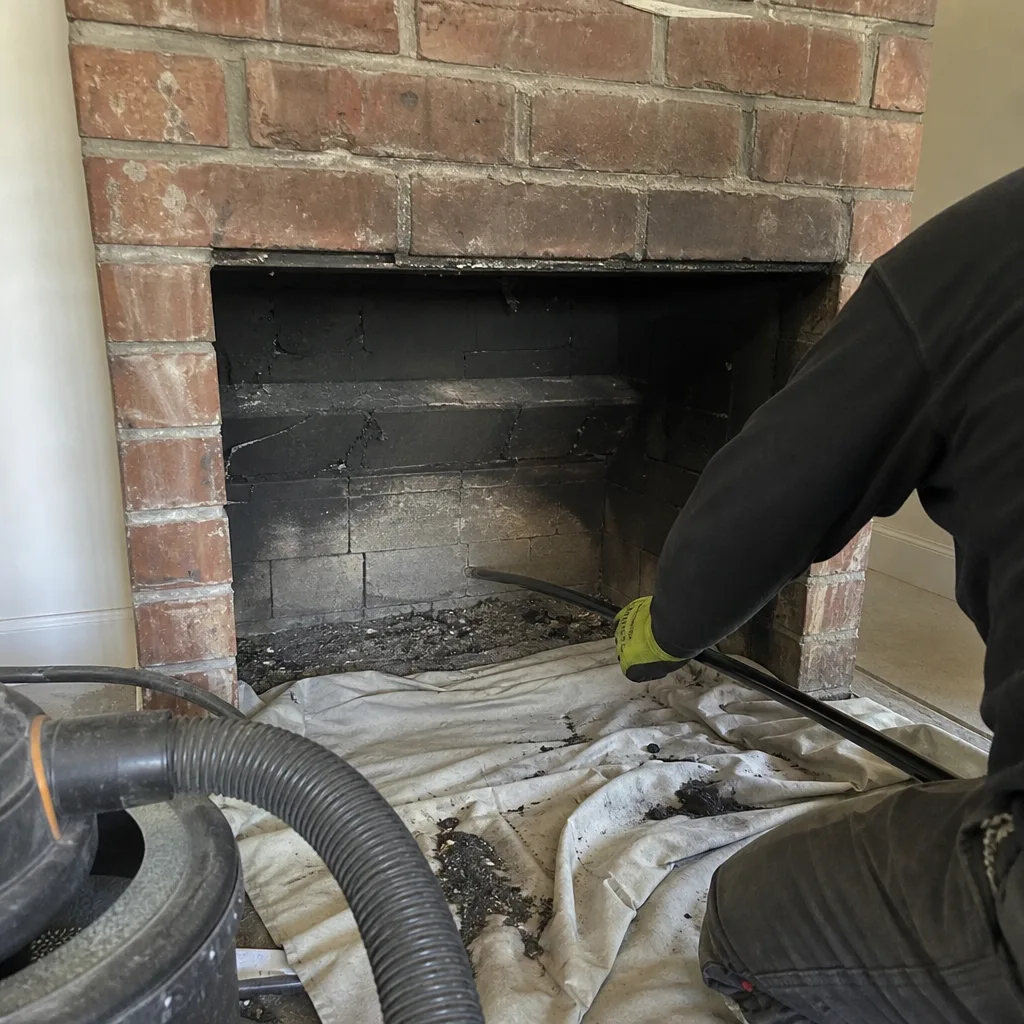
- Setup. Drop cloths and a protective seal go down around the hearth and work area to contain dust.
- Access. The technician gets to the flue from the firebox and, when needed, the roof to inspect both ends.
- Sweeping. Rotating brushes sized to your flue remove creosote and soot, with a high-powered vacuum running throughout.
- Cleaning the firebox and damper. Ash, dust, and residue are cleared, and the damper is checked for smooth operation.
- Inspection. The flue interior is examined with a camera so the technician sees what the broom can’t.
- Report. You receive findings and, if repairs are suggested, the written estimate that sets the price.
For gas fireplaces, the sweep focuses on the venting, condensation residue, and termination rather than creosote. Either way, the goal is the same: safe draft and a sound structure from firebox to flue top.
The weather window matters more than people think. In Provo, a lot of homeowners schedule cleaning in early fall, before the first sustained burn of the season, so the system is ready when the cold settles in. That timing also means fewer surprises once the inversion season gets going and the chimney is working hardest. When your system has been checked and cleaned ahead of the cold, you’re not guessing on the first cold snap. Our chimney sweep visits pair cleaning with that condition check as a matter of course.
Caps and Crowns: Protecting the Investment After the Cleaning
A clean, sound flue is only as good as the two things that sit above it: the cap and the crown. Both are water and weather barriers, and both are quietly the difference between a chimney that lasts and one that slowly crumbles.
The chimney cap keeps rain, snow, birds, and debris out of the flue while letting smoke escape. A missing or damaged cap allows water directly into the flue, which accelerates creosote breakdown and, in a masonry chimney, freezes and cracks the tiles. In Provo’s freeze-thaw cycle, water intrusion is one of the most common causes of liner damage we find.
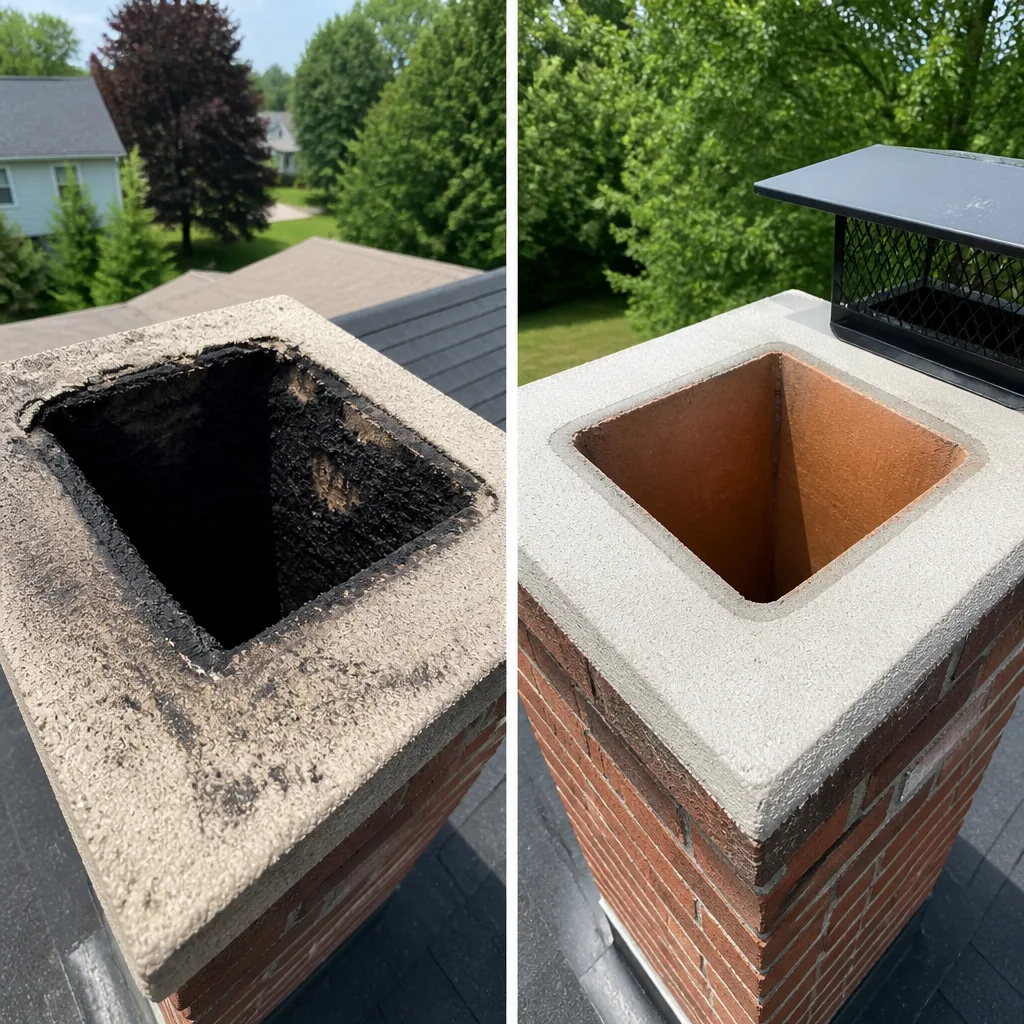
The crown is the concrete surface at the top of the chimney that sheds water away from the masonry. When a crown cracks or crumbles, water runs into the brick and mortar, and in the winter it freezes, expands, and forces the masonry apart. A small crown repair early prevents a much larger masonry problem later.
This is why our cap and crown installation service exists as its own category. Cleaning gets your flue ready to burn safely. The cap and crown keep it that way. If a camera inspection or a roof-level look shows a failing crown or a missing cap, we’ll flag it, explain what can safely wait, and give you a written estimate before any work begins.
Common Mistakes to Avoid
- Hiring a sweeper who won’t camera the flue. In a Provo chimney with unknown history, a sweep without a camera scan leaves the most important part of the system unchecked. A Level 1 look can’t reveal a cracked liner the brush just passed over.
- Skipping the annual gas fireplace check. Gas fireplaces produce no smoke, so they feel self-cleaning. The sulfur and condensation buildup in Utah Valley’s climate can damage a liner over a single winter, so annual cleaning still applies.
- Burning unseasoned or green wood. Wet wood burns cool and smokes heavily, which is the fastest way to build glazed, stage-three creosote. In Provo’s long burn season, this compounding adds up fast.
- Ignoring the crown and cap. Many homeowners focus on the firebox and forget the two components that keep water out. A cracked crown goes unnoticed until the masonry has already suffered.
- Assuming “once a year” covers every system. A household burning several cords per winter may need more frequent cleanings than a rarely used gas insert, and it’s the burn pattern that sets the schedule.
- Trusting a report with no photo evidence. If a technician recommends significant liner or masonry work without showing you the camera footage, you have no way to verify it. Ask to see the evidence before agreeing to anything.
- Waiting until the first cold snap. Scheduling a sweep before the burn season starts in Provo means your system is checked and ready when it’s working hardest, not evaluated in the middle of a heavy burn cycle.
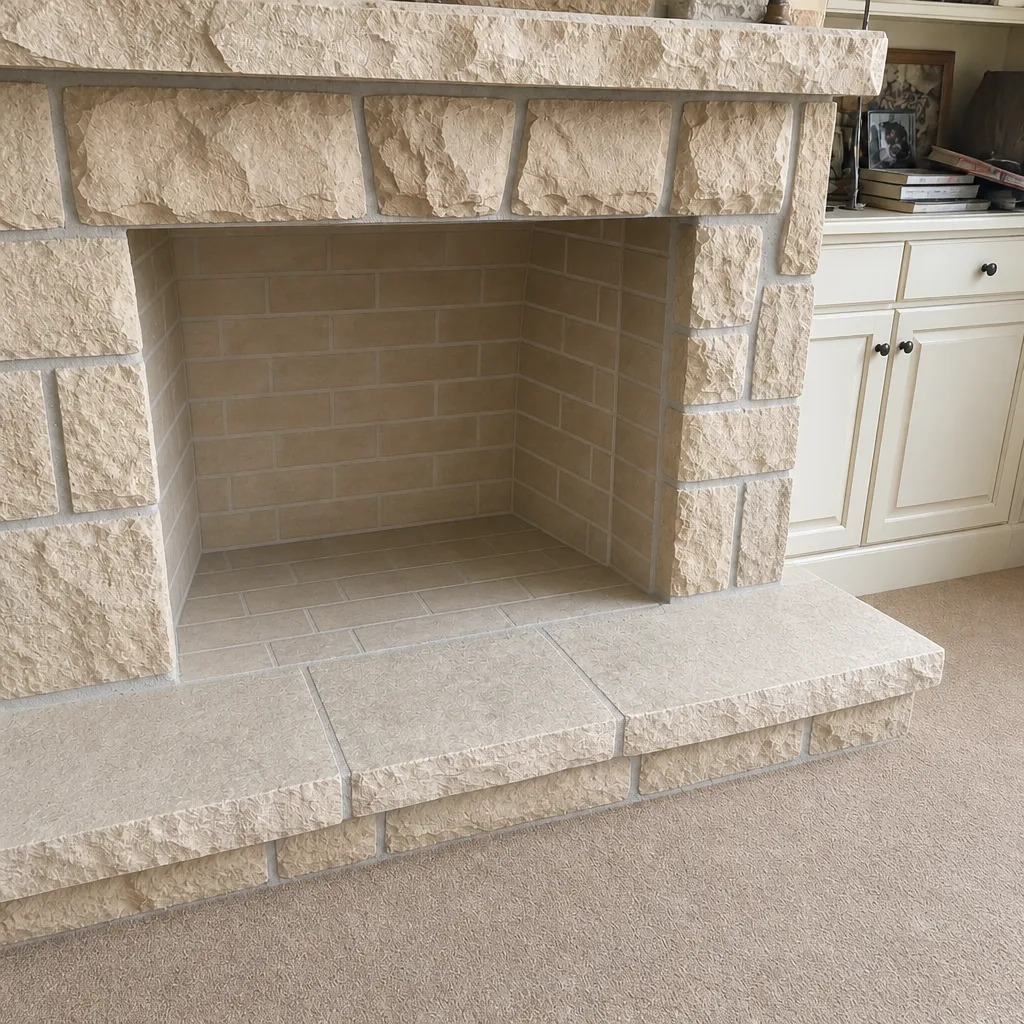
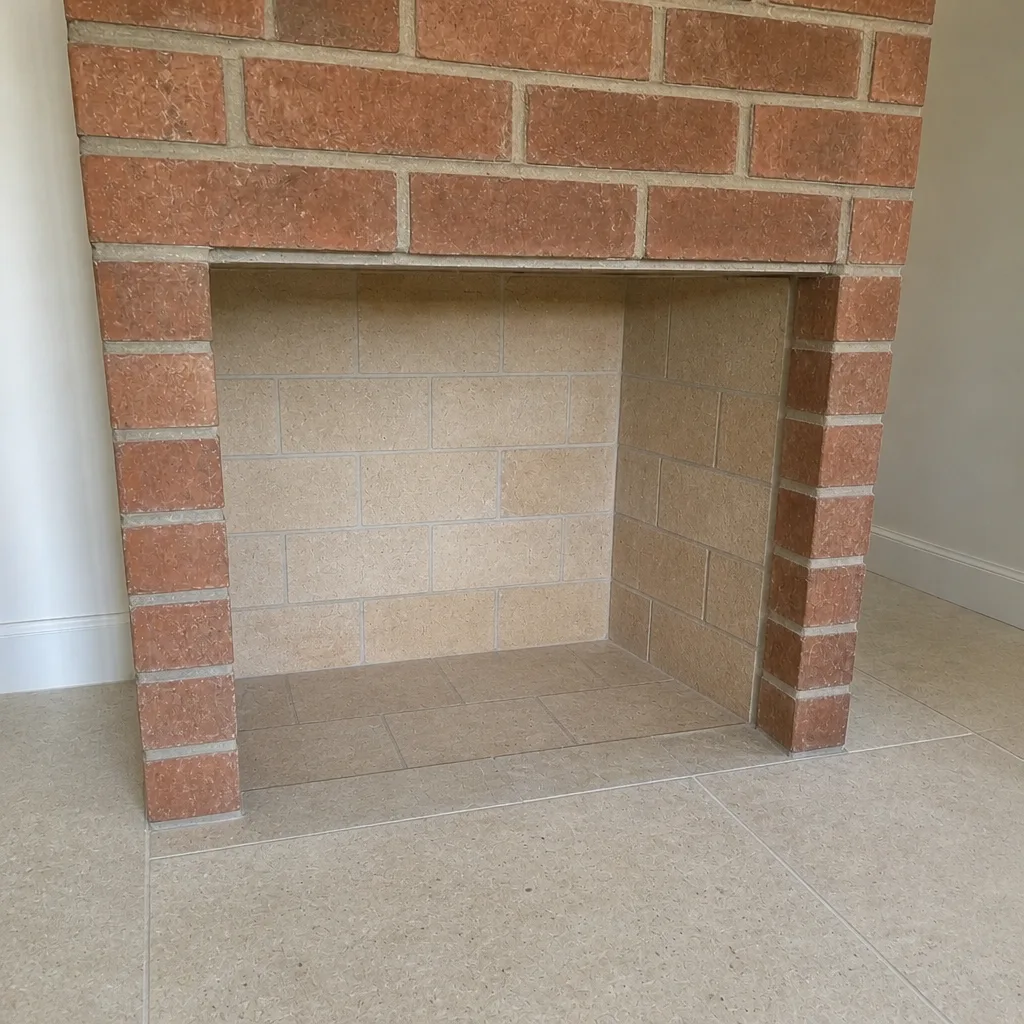
See the difference
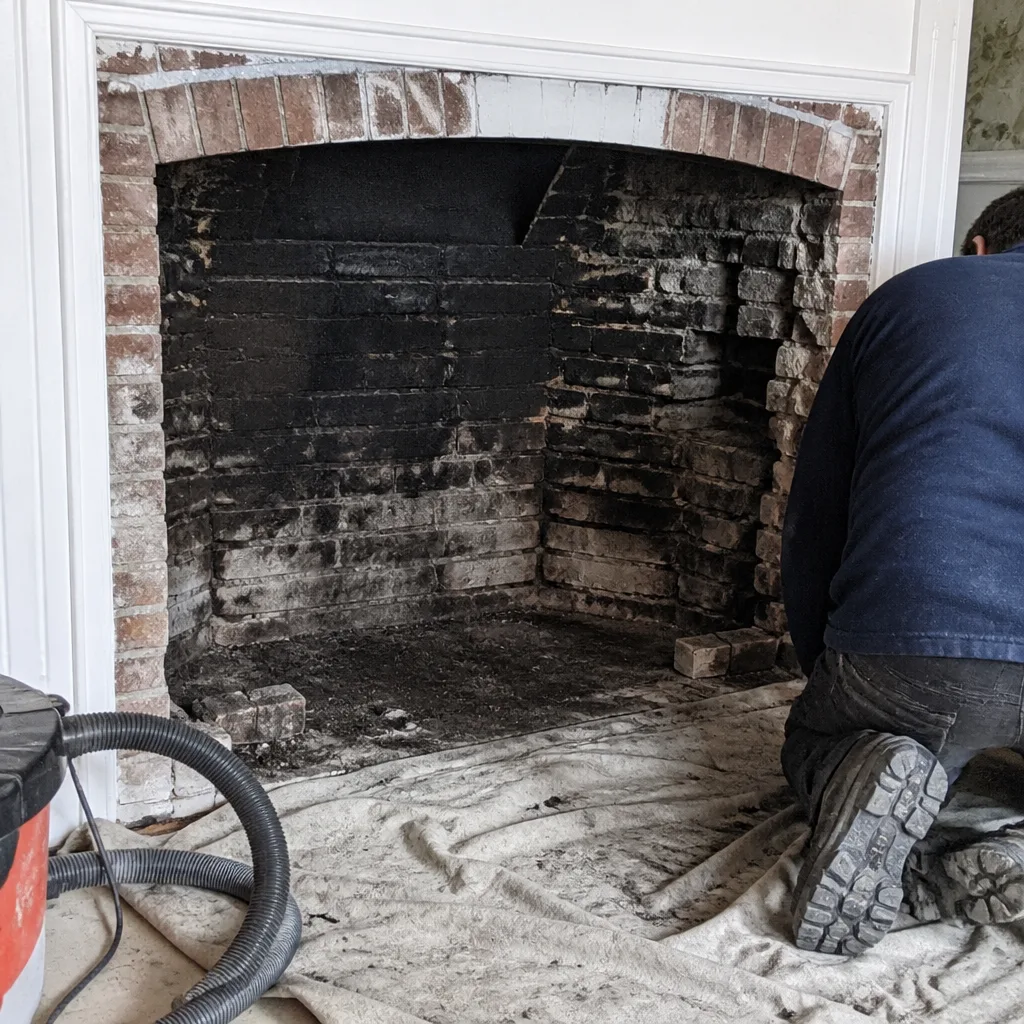 Before
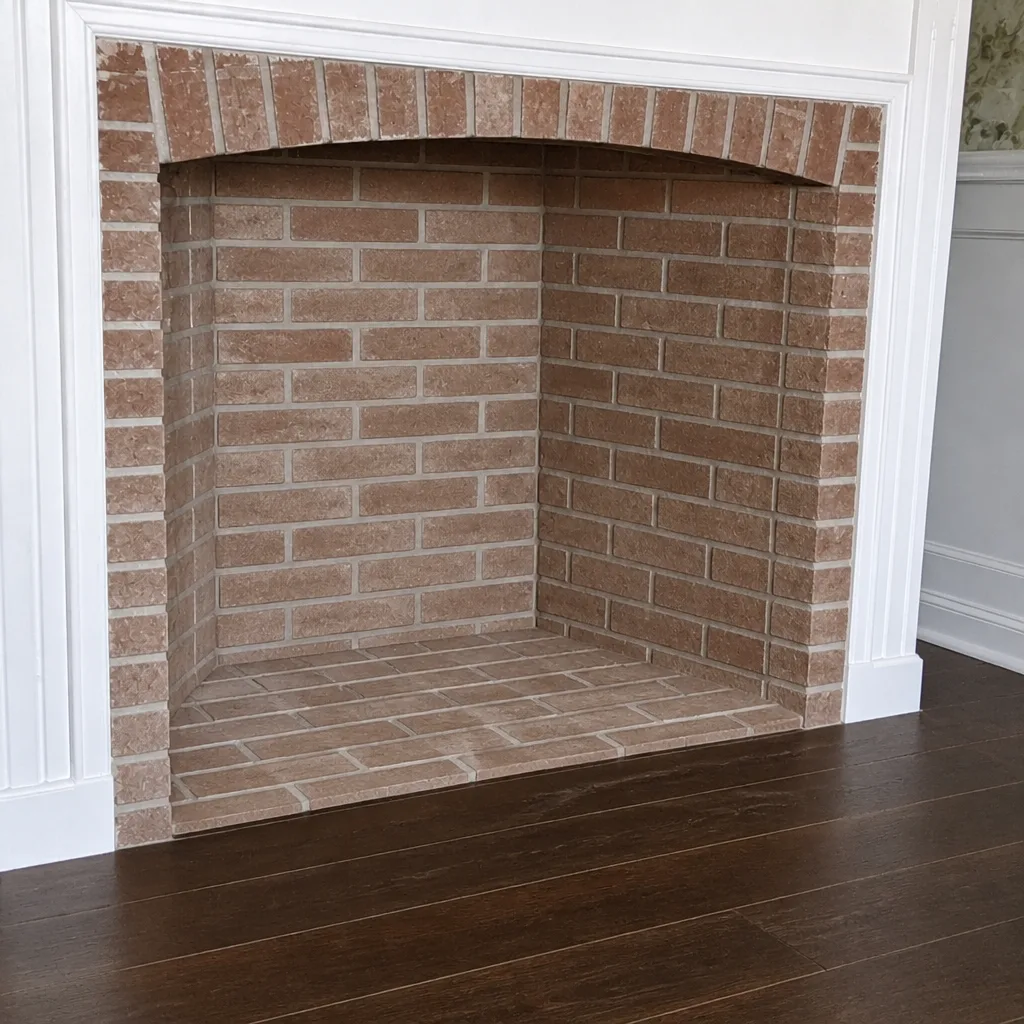 After
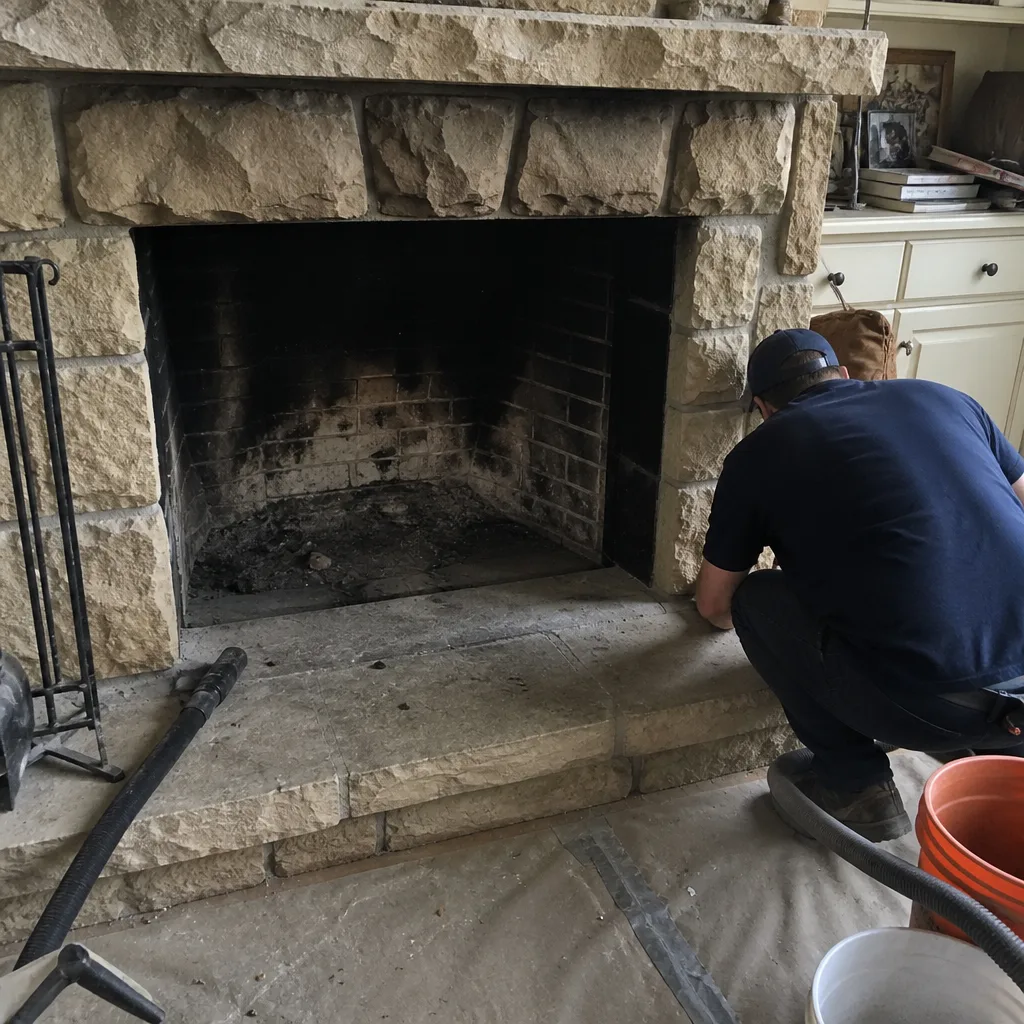 Before
 After
 Before
 After
When to Call a Professional
Some chimney issues can be deferred; others shouldn’t wait. Call us if you smell a strong, smoky odor coming from the fireplace even when it’s not in use, if you see creosote flakes or soot falling into the firebox, or if you notice draft problems where smoke rolls back into the room. Call after any chimney fire, even a small one, because the heat can crack a liner you can’t see. Call after a fuel conversion, after buying a Provo home with an unknown chimney history, or if it’s simply been years since anyone looked at the system. And call if a previous inspection felt rushed or never showed you the inside of your flue. Provo Chimney Sweep Pros offers free estimates in Provo – call (866) 937-8214. We answer 24/7, with fast dispatch from 7am to 7pm, Sunday through Friday.
Frequently Asked Questions
The cost depends on your system, fuel type, and what the inspection finds, so the written estimate sets the final price after we see the chimney. A simple wood-flue sweep on a well-maintained system costs less than a visit that includes a camera inspection or reveals liner repairs. Call (866) 937-8214 for an exact quote – estimates are free.
Not always. A compromised clay liner is often a candidate for HeatShield resurfacing rather than full replacement, which is why we inspect before recommending anything. A full DuraFlex liner replacement is the right answer only when the existing structure can’t hold a restoration. We’ll show you the camera evidence and tell you plainly whether it can wait. Call (866) 937-8214 to book an inspection.
Sweep based on how much and how you burn, not just the calendar. A wood fireplace used regularly through Provo’s long cold season may need cleaning once or twice a year, while a gas fireplace still needs an annual check for condensation and sulfur residue. Call (866) 937-8214 for a quote tailored to your system.
Creosote builds in layers, and stage-three glazed creosote is highly combustible, so a skipped cleaning raises real chimney fire risk. In Provo’s inversion season, cool, lingering smoke accelerates that buildup faster than many homeowners expect, and a cracked liner can go unnoticed. A sweep and inspection catch it before it costs you. Call (866) 937-8214 – estimates are free.
Yes. Gas fireplaces produce water vapor and mildly acidic condensate that can pit a linear over time, plus dust and debris that restrict draft. In Provo’s climate, an annual check keeps the venting clear and the liner intact. Call (866) 937-8214 to schedule your gas fireplace cleaning.
A Level 1 inspection covers readily accessible components, while a Level 2 adds a video camera scan of the entire flue. A Level 2 is the right call after a fuel conversion, a chimney fire, a property sale, or any unknown-history chimney, which covers many Provo homes. Call (866) 937-8214 to book the level your system needs.
The Bottom Line
Chimney cleaning in Provo isn’t a single transaction, it’s a diagnosis. Fuel type, liner condition, and Utah Valley’s inversion season all shape what your flue actually needs, and the gap between a surface sweep and a full system assessment is where fires start. A proper visit pairs sweeping with the right inspection level, shows you the camera evidence, and tells you honestly what can wait and what can’t. Whether it’s routine cleaning, a fireplace repair, a chimney repair, or a HeatShield restoration that saves a liner, the goal is the same: safe draft and a sound structure from firebox to flue top. Call Provo Chimney Sweep Pros at (866) 937-8214 for a free estimate. We answer 24/7, with fast dispatch from 7am to 7pm, Sunday through Friday.
Ready to book? Start with a Provo Chimney Sweep Pros chimney cleaning and inspection and get the full picture of your system. Our technicians have up to 10 years of experience, and every visit includes a camera inspection and photo report so you see what we see. Call (866) 937-8214 for your free estimate.
Written by the team at Provo Chimney Sweep Pros.