
Last updated November 25, 2026
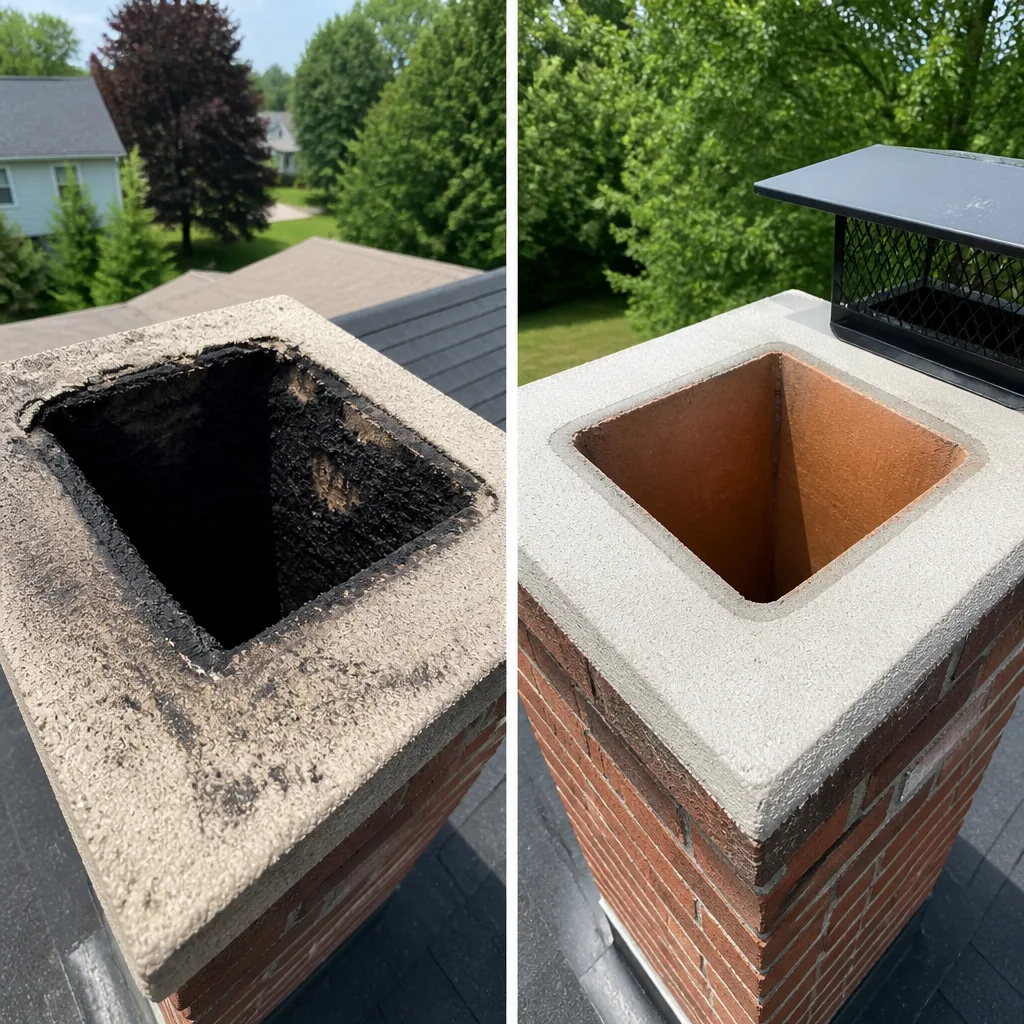 Sweep & inspection
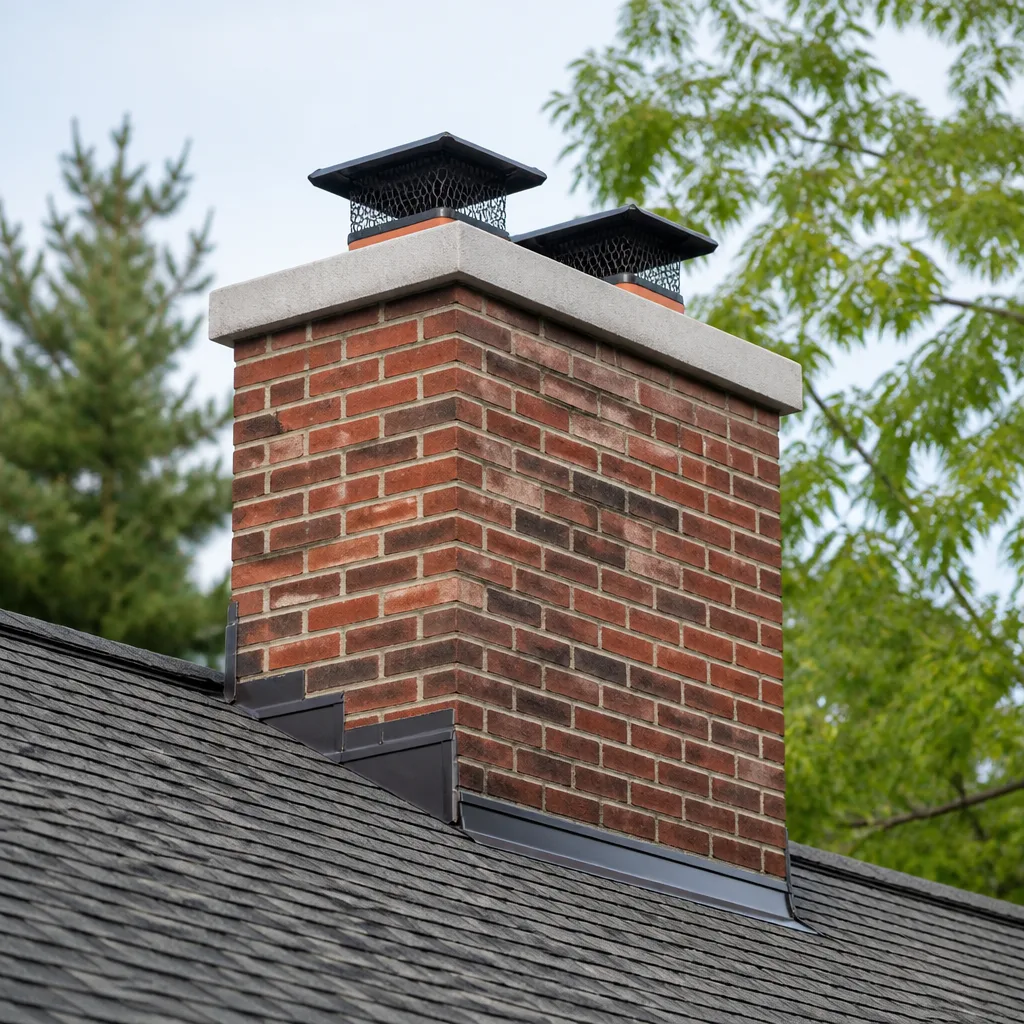 Caps & crowns
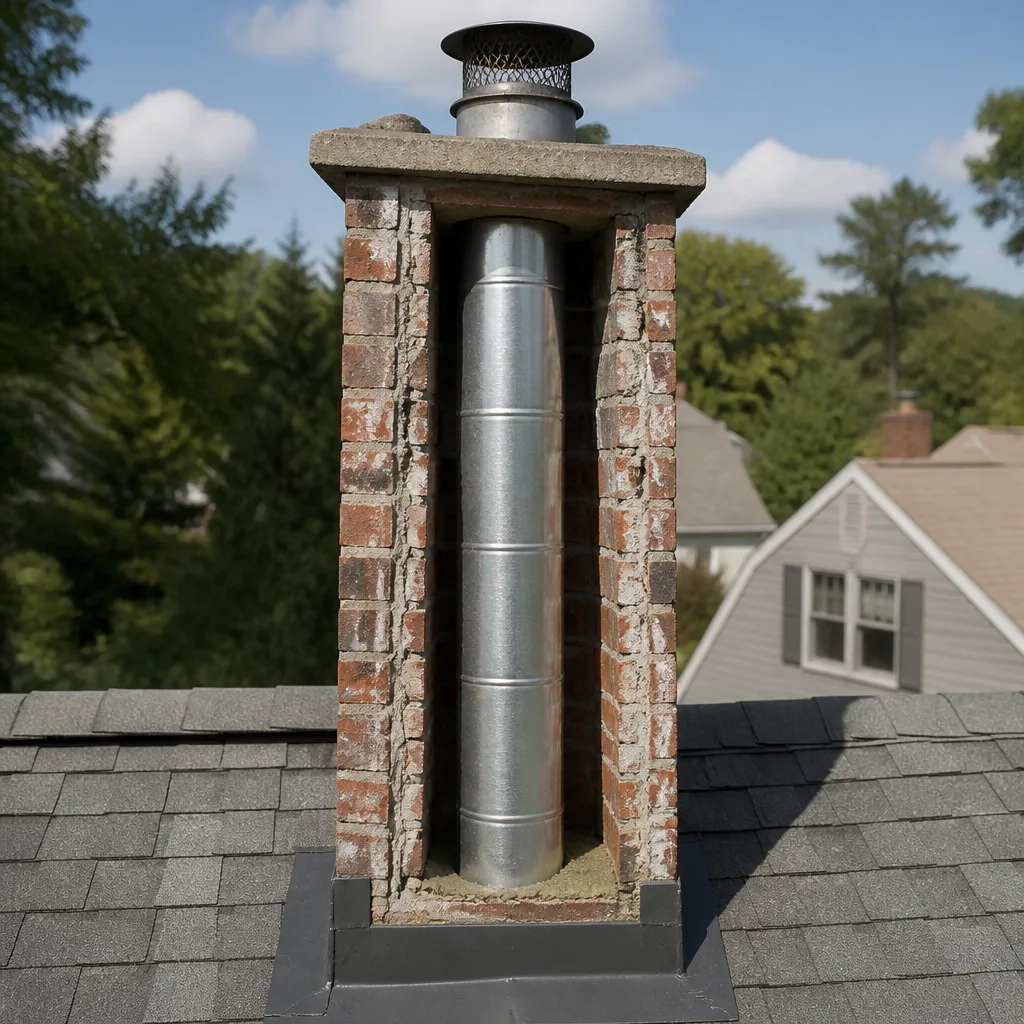 Flue relining
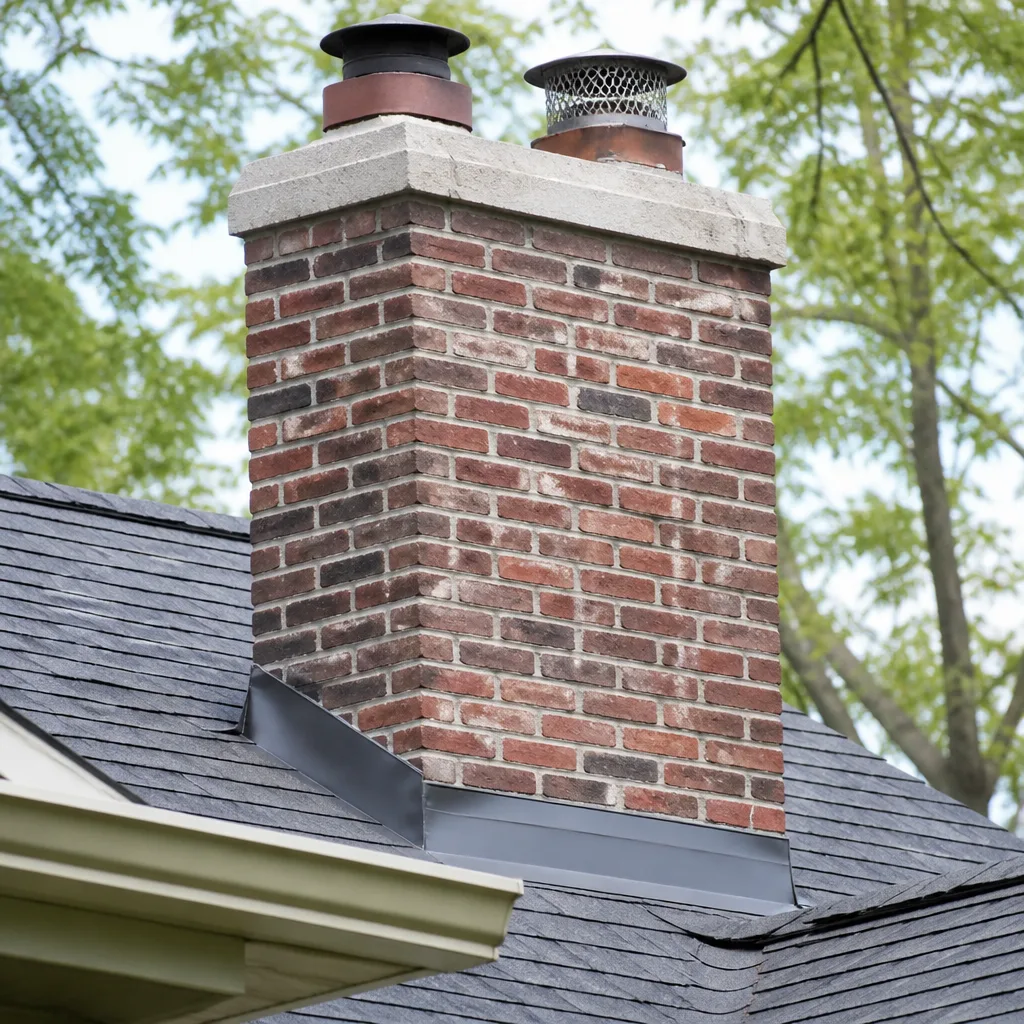 Masonry repair
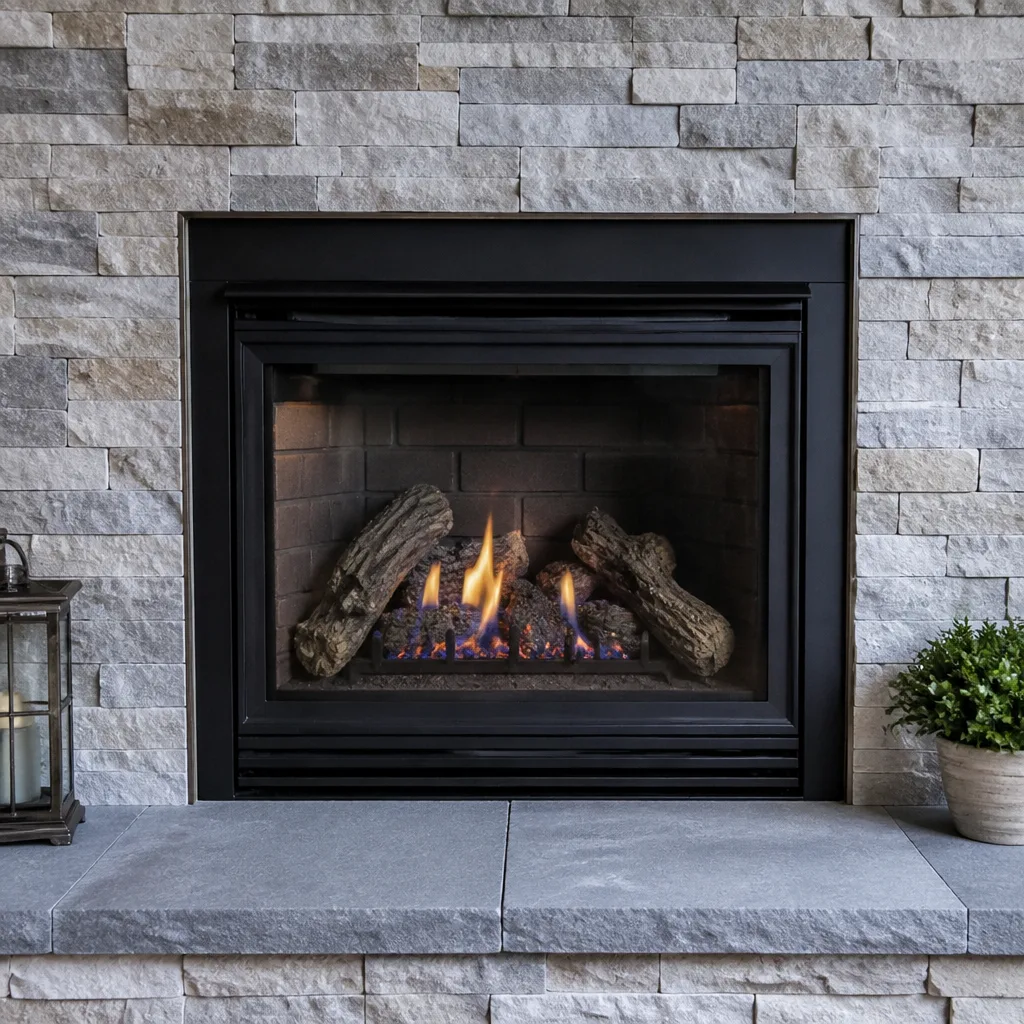 Gas fireplace service
Level 1 sweep and inspection to the NFPA 211 annual standard - flue, crown, cap, and flashing checked and photographed
Chimney sweep logs do not sweep chimneys. They loosen some creosote - which then falls where a brush and vacuum still have to collect it.
Chimney Sweep Maintenance Checklist for Provo Homeowners
The standard “get it swept once a year” advice was written for mild climates, and it doesn’t hold up in Provo. Our freeze-thaw cycles attack chimney crowns and mortar joints in ways a cleaning alone will never address, and most national checklists never even mention the crown. A chimney can pass a sweep with a clean flue and still be failing at the top, where water gets in and ice pries masonry apart. What follows is a component-by-component checklist built around what actually breaks here: the cap, the crown, the flashing, the liner under thermal cycling, the smoke chamber, and the damper. You’ll learn what a pass and a fail look like for each, what you can safely observe from the ground and the firebox, and what genuinely needs a technician. Mention Provo once more and we’ll get into it.
Quick Answer
A chimney maintenance checklist for Provo should cover six components: cap, crown, flashing, liner, smoke chamber, and damper. Each one gets inspected for specific failure signs, and the timing matters. In Utah’s climate, a post-winter check in March catches freeze-thaw damage that a pre-season check in September misses, and vice versa. Most of what you can check yourself is visual observation from the roofline and firebox; anything involving the flue interior, liner integrity, or masonry repair needs a technician. A sweep and inspection once a year, plus a look after winter, is the baseline.
Styles & brands we work with
- Sweep & inspection
- Caps & crowns
- Flue relining
- Masonry repair
- Gas fireplace service
Table of Contents
- Why a Provo Chimney Checklist Looks Different
- The Component-by-Component Checklist
- What You Can Check Without a Ladder
- Tracking Liner Wear Over Multiple Seasons
- What’s a DIY Observation and What Needs a Technician
- Seasonal Timing: March vs. September in Utah
- Common Mistakes to Avoid
- When to Call a Professional
Why a Provo Chimney Checklist Looks Different
Provo sits in a valley where temperatures swing hard across the freeze line, and that swing is the single biggest driver of chimney failure here. Water gets into a hairline crack in the mortar or the crown during a warm afternoon, freezes solid overnight, expands, and widens the crack. The next thaw lets more water in. Repeat that across a winter and a small crack becomes a real one. A chimney in Atlanta might see a handful of freeze-thaw events a year. A chimney in Provo sees them constantly, and the damage compounds season after season.
That’s why a generic checklist that only covers sweeping the flue is incomplete for a Provo home. Sweeping removes creosote, and creosote removal is genuinely important for fire safety. But a sweep doesn’t tell you whether your crown is cracked, whether your cap is rusted through, or whether your mortar joints have started to crumble from ice. Those are separate inspection items, and they’re the ones that fail first in this climate.
There’s a second local factor: the valley’s air. Provo and the surrounding Utah Valley see winter inversions that trap cold air and particulates close to the ground. That doesn’t directly damage your chimney, but it does mean more homes burn wood through the cold months, which means more creosote accumulation per season than a mild-climate home would see. A fireplace used regularly through a Provo winter earns its annual sweep.
And the housing stock matters too. Older homes around downtown Provo and the neighborhoods near Brigham Young University often have original clay tile liners that have been through decades of thermal cycling. Those liners develop cracks and spalling that a stainless system wouldn’t. Knowing what kind of liner you have changes what you’re watching for. A technician can tell you in minutes; the checklist below tells you what to look at in the meantime.
The point isn’t that Provo chimneys are uniquely fragile. It’s that the failure modes here lean toward water and thermal damage more than they lean toward simple soot buildup. A checklist that only accounts for soot misses most of what actually goes wrong.
The Component-by-Component Checklist
Here’s the full system, from the firebox up to the flue top. For each component, we’ve laid out what a pass looks like and what a fail looks like, so you can match what you see against a clear standard. Work through them in order and you’ll have a real picture of your chimney’s condition.
1. Chimney Cap
The cap is the metal or masonry cover at the very top that keeps rain, snow, birds, and debris out of the flue. A pass means the cap is firmly attached, the mesh or screen is intact, and there’s no significant rust or corrosion. A fail means the cap is loose, missing, dented enough to let water in, or rusted through. A missing cap is one of the most common problems we see, and it lets water straight into the flue. Many caps are made by brands like Copperfield, and replacing a failing cap is one of the more straightforward repairs in the trade.
2. Crown
The crown is the concrete or mortar slab on top of the chimney that sheds water away from the masonry. A pass means the crown is intact, sloped away from the flue, and free of cracks wider than a hairline. A fail means visible cracking, crumbling, or separation from the flue, which lets water into the chimney body. Crown damage is the classic Provo failure because of freeze-thaw, and it’s the item most generic checklists skip entirely.
3. Flashing
Flashing is the metal where the chimney meets the roof, and it’s the seal that keeps roof water out of the house. A pass means the flashing is tight against both the chimney and the shingles, with no lifting, gaps, or rust. A fail means separated flashing, missing sealant, or visible daylight where there shouldn’t be. Water coming in around the flashing often gets blamed on the roof, so it’s worth checking separately.
4. Liner
The liner is the flue’s inner wall, either clay tile or a stainless system like DuraFlex. A pass means the liner is continuous with no cracks, gaps, or spalling (flaking). A fail means cracked tiles, missing mortar joints between tiles, or a rusted or separated stainless liner. Liner condition is the most safety-critical item on this list and the hardest to check from outside, which is why it’s a technician item. You can read more about what we do with liners on our chimney repair page.
5. Smoke Chamber
The smoke chamber is the sloped area just above the damper that funnels smoke into the flue. A pass means the surfaces are smooth and intact. A fail means rough, deteriorated mortar that catches creosote and slows draft. Rough smoke chambers are a fire risk because creosote collects on the uneven surface. HeatShield restoration is one way to smooth and resurface a failing smoke chamber without a full rebuild.
6. Damper
The damper is the metal door above the firebox that you open and close. A pass means it opens fully, closes snugly, and the handle works. A fail means it’s stuck, doesn’t seal, or is rusted through. A damper that won’t close all the way lets heated air escape up the flue when you’re not burning, which wastes energy all winter.
- Cap: pass = secure and intact; fail = loose, rusted, or missing
- Crown: pass = intact and sloped; fail = cracked, crumbled, or separated
- Flashing: pass = tight and sealed; fail = lifted, gapped, or rusted
- Liner: pass = continuous; fail = cracked tiles or separated stainless
- Smoke chamber: pass = smooth; fail = rough, deteriorated mortar
- Damper: pass = opens and seals; fail = stuck or won’t close
What You Can Check Without a Ladder
You don’t need to climb anything to catch a lot of problems. A pair of binoculars from the yard and a flashlight pointed up the firebox will tell you more than most homeowners realize. These are observation tasks, not repair tasks. You’re looking, not touching. The goal is to notice something worth a technician’s look, not to fix it yourself.
From the ground, using binoculars:
- Look at the top of the chimney. Is there a cap? Is it sitting flat, or is it tilted or missing? A missing cap is visible from the yard.
- Look at the crown. Does the top slab look solid, or are there visible cracks and chunks missing? Cracks running from the flue outward are the ones to note.
- Look at the flashing line. Where the chimney meets the roof, is the metal tight, or is there a gap or lifted edge? Check after a rain for staining below it.
- Look at the masonry. Are the bricks and mortar joints intact, or is mortar crumbling and falling out (spalling)? White staining on the brick can indicate water moving through.
From inside, at the firebox, with a flashlight:
- Shine the light up the flue. You won’t see the whole liner, but you can see the first few feet. Look for cracked tiles, gaps between tiles, or heavy creosote buildup (a thick, crusty, or glossy black coating).
- Check the damper. Does it open and close smoothly? Does it seal against the frame?
- Look at the smoke chamber above the damper. Is the surface smooth, or rough and crumbly?
- Look for water stains, rust, or efflorescence (white powder) around the firebox, which can signal moisture getting in from above.
Write down what you find and the date. That record becomes valuable over multiple seasons, and we’ll cover how to use it next.
Tracking Liner Wear Over Multiple Seasons
A liner doesn’t fail overnight. Clay tiles crack gradually from thermal cycling, and stainless liners like DuraFlex degrade slowly at seams and joints. The way to catch that progression before it becomes a safety problem is to document the liner the same way every year, so you can compare this year’s photos to last year’s. A single photo tells you what the liner looks like now. A series of photos taken from the same angle tells you whether it’s getting worse, and how fast.
Here’s how to build a useful record:
- Pick consistent angles. Photograph the same spot in the flue each time, from the same position at the firebox, aimed at the same point up the flue. Mark the spot with a piece of tape on the firebox frame if you need a reference.
- Use flash, and use it the same way. A flashlight held at the same angle each time gives you comparable shadows. Shadows are what reveal cracks; a flatly lit photo hides them.
- Photograph the damper and smoke chamber too. They wear along with the liner and belong in the same record.
- Date every photo and add a one-line note. “March, post-winter, crack visible at second joint” is enough. Keep them in one folder.
- Compare year over year. A hairline crack that stays the same size for three seasons is one thing. A crack that’s visibly wider each year is a liner replacement conversation.
For clay tile liners, watch for spalling (flaking of the tile surface) and mortar missing at the joints. For stainless liners, watch the seams and any point where the liner bends or connects. Different liners need different brand-appropriate repair approaches, which is where a company that works with DuraFlex and HeatShield gives you options a sweep-only service doesn’t have. HeatShield restoration can resurface a deteriorating clay liner in some cases, which can mean avoiding a full replacement. But it isn’t right for every liner, and only a technician looking at the actual condition can tell you which path applies.
The photo record also protects you. If a technician recommends liner work, you can look at your own photos and see the condition for yourself. We don’t recommend anything without showing you the evidence, and your own file is a second set of eyes.
What’s a DIY Observation and What Needs a Technician
There’s a clean line between what a homeowner can safely observe and what genuinely needs a trained technician in the flue. Crossing that line is where people get hurt, so it’s worth being clear about it.
Legitimate DIY observation tasks:
- Checking from the yard with binoculars for cap, crown, flashing, and masonry condition
- Shining a flashlight up the flue from the firebox to see the first few feet
- Testing the damper open-and-close
- Photographing the same spots each season
- Noting water stains, rust, or efflorescence around the firebox
- Keeping a dated record of what you see
Tasks that need a technician:
- Sweeping the flue to remove creosote
- Inspecting the full liner top to bottom
- Any masonry repair to the crown, cap, or flashing
- Liner restoration or replacement
- Repairing a damaged smoke chamber
- Anything that requires climbing onto the roof or entering the flue
The reason for the split is safety, not territory. Creosote is flammable and the flue is a confined space. Roof access on a pitched roof is a fall hazard. And a liner crack you can’t quite see from the firebox can still be a real fire risk, which is why the full liner inspection is a technician item. Our technicians have up to 10 years of experience reading exactly these conditions, and an inspection following NFPA 211 standards is built to catch hazards before they become house fires. That’s the standard we hold inspections to, and it’s why we’d rather you observe and let us do the diagnosis. You can read about routine sweeping on our chimney sweep page.
Seasonal Timing: March vs. September in Utah
Timing changes what an inspection catches. A pre-season check in September and a post-winter check in March look at the same components but find different things, because they come after different stresses. In Utah’s climate, that difference is significant, and following a seasonal rhythm catches more than an annual single check.
The March post-winter check
By March, your chimney has just been through a full winter of freeze-thaw cycles and heavy use. This is when the damage from the cold season is fresh and visible:
- Crown cracks opened by ice expansion
- Spalled mortar joints
- Liner cracks from the season’s thermal cycling
- Water intrusion from snow and ice getting under a failing cap or flashing
- Heavy creosote from a winter of regular burning
The March check is the one that catches the damage while it’s still small. A crown crack found in March can be sealed before summer storms push water deeper into the masonry.
The September pre-season check
By September, your chimney has been through a dry, warm summer, and the things that show up now are different:
- Loose caps or flashing that shifted with summer storms and thermal movement
- Debris and bird nests that built up during the off-season
- Draft problems from a damper that seized during the summer
- Any damage that’s had all summer to deepen
The September check gets the chimney ready for the first fire of the season, so nothing surprises you when you light it.
In practice, a March check and a September check cover the full year. If you only do one, do the annual sweep and inspection before the burning season, and add the March visual check to catch winter damage early. Our team works with you on the timing that fits your fireplace’s use. If you have a wood-burning fireplace you use regularly through the Provo winter, the annual sweep is the floor, and the post-winter visual is the extra layer that pays off. For gas fireplaces, the rhythm is gentler; the liner and venting still need periodic inspection. If the fireplace itself has issues, that’s where fireplace repair comes in separately.
Common Mistakes to Avoid
- Skipping the crown because the sweep looked clean. A clean flue says nothing about the crown. In Provo, the crown is often the first thing to fail, and it’s not visible from inside.
- Assuming a missing cap is cosmetic. A missing cap lets rain and snow straight into the flue, and it invites birds and debris. It’s a water-intrusion path, not a decoration.
- Checking only in autumn. A September check catches summer damage but misses the freeze-thaw damage that shows up in March. Do both, or at least add the spring look.
- Treating a hairline crack as harmless forever. A hairline crack that stays the same for years is different from one that grows each season. Track it with photos and watch for change.
- Putting off liner concerns to save money. A cracked liner is a fire hazard. HeatShield restoration may save you a full replacement in some cases, but only an inspection can tell you which applies.
- Hiring a general handyman for chimney work. Chimney systems are their own trade, and a generalist may miss liner or smoke chamber problems that a specialist would catch. Look for dedicated chimney specialists.
- Assuming gas fireplaces need no maintenance. A gas fireplace still has venting, a liner, and a flue that needs periodic inspection. The fire is cleaner; the system isn’t maintenance-free.
When to Call a Professional
Call a technician if you find any of the following: a missing or loose cap, visible crown cracks, separated or rusted flashing, spalled mortar, cracked tiles or a damaged stainless liner, a damper that won’t close, a rough or crumbling smoke chamber, or water stains and rust around the firebox. Call if it’s been more than a year since the chimney was swept, or if you’ve never had an inspection and don’t know the liner’s condition. Call if you see heavy creosote buildup or smell smoke in the house when you burn. Call before the burning season, not after. Provo Chimney Sweep Pros offers free estimates in Provo, so you can find out what condition your chimney is in and what it needs without committing to work. Call (866) 937-8214.
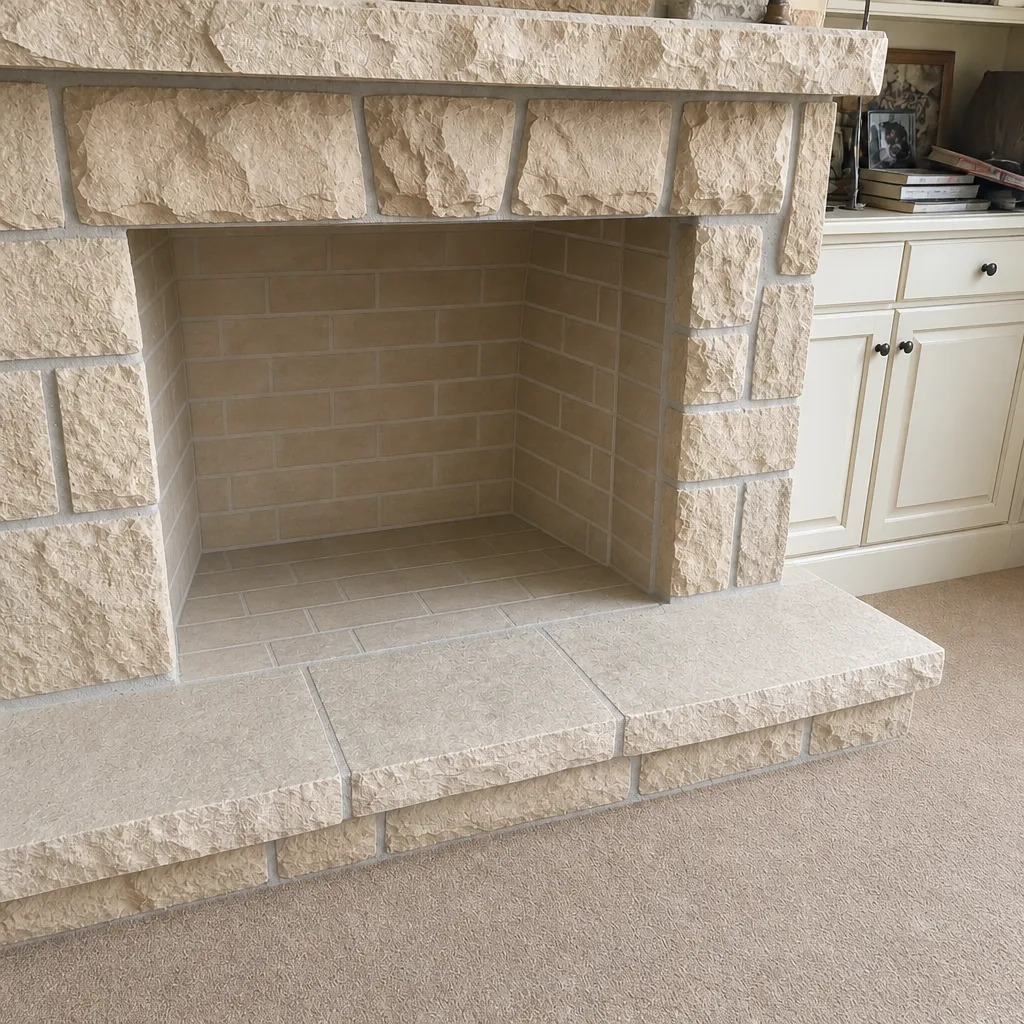
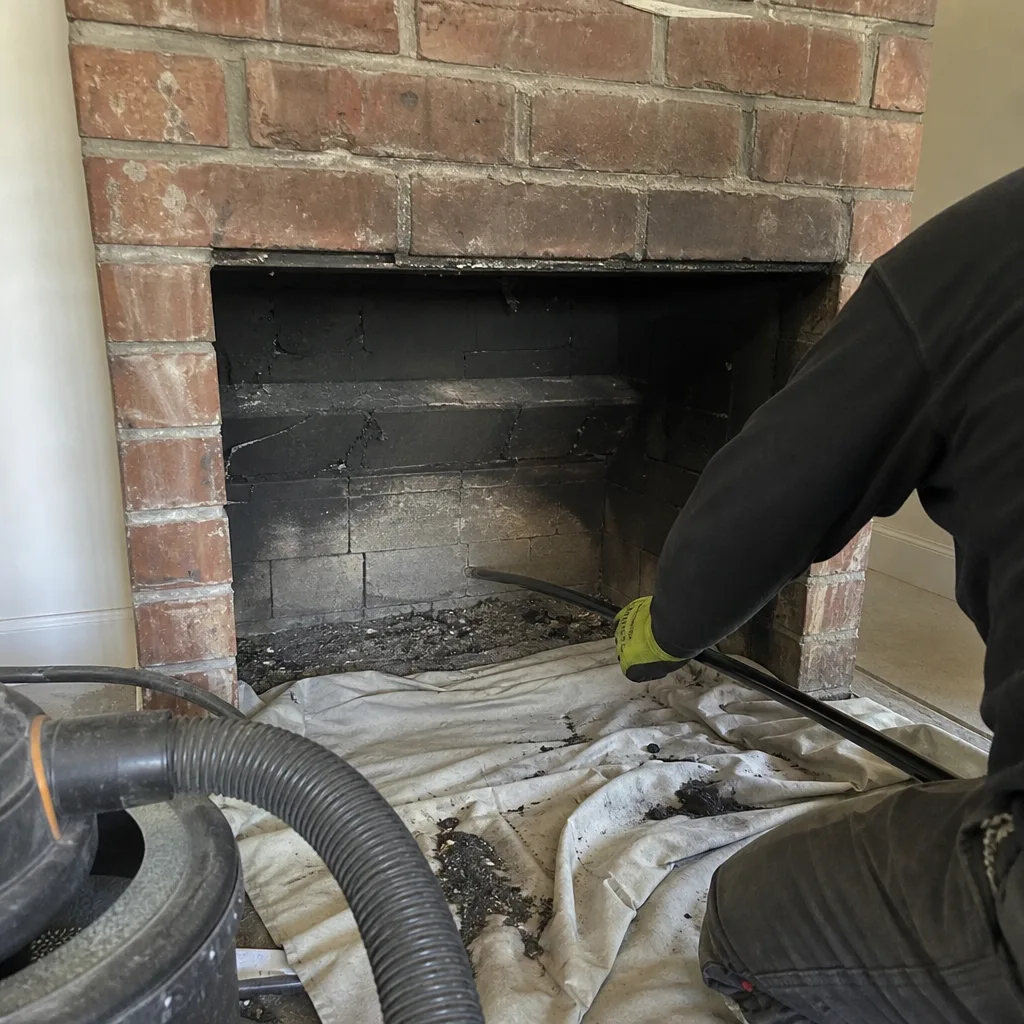
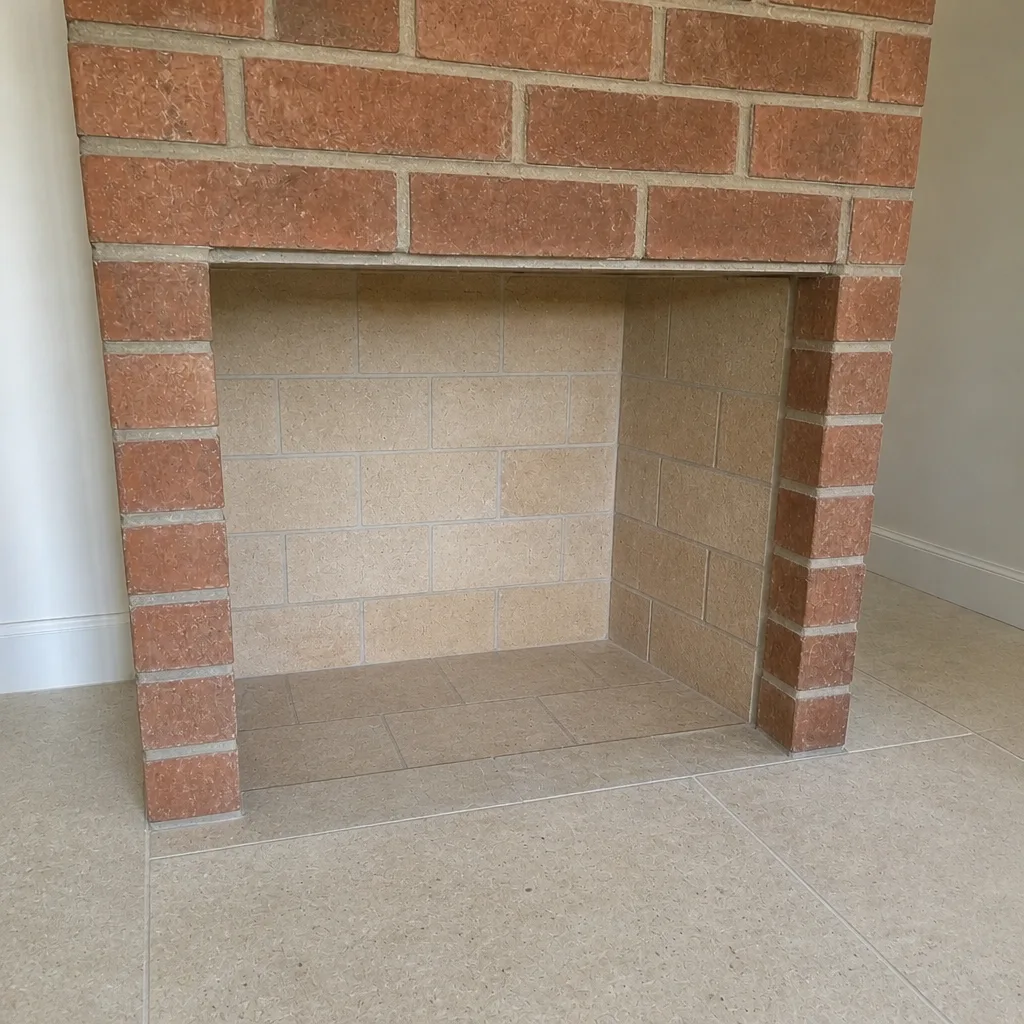
See the difference
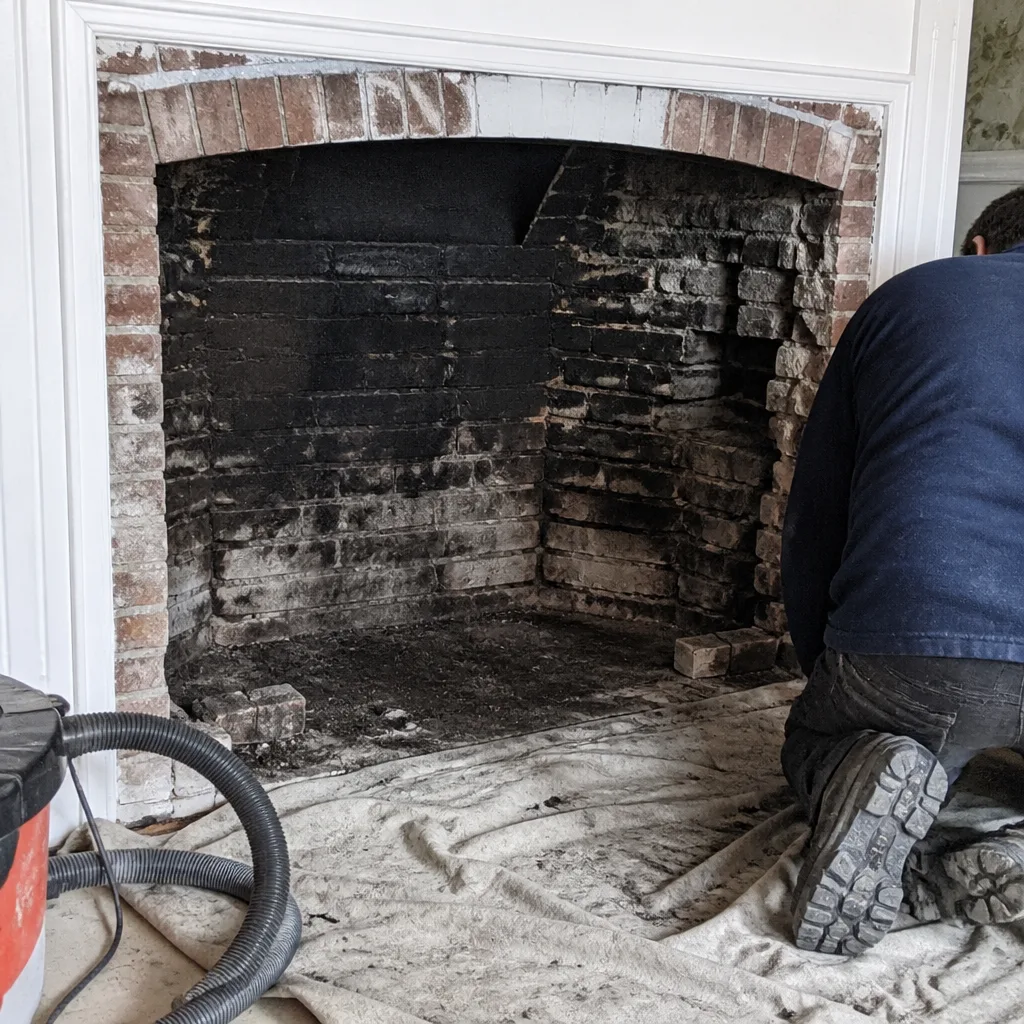 Before
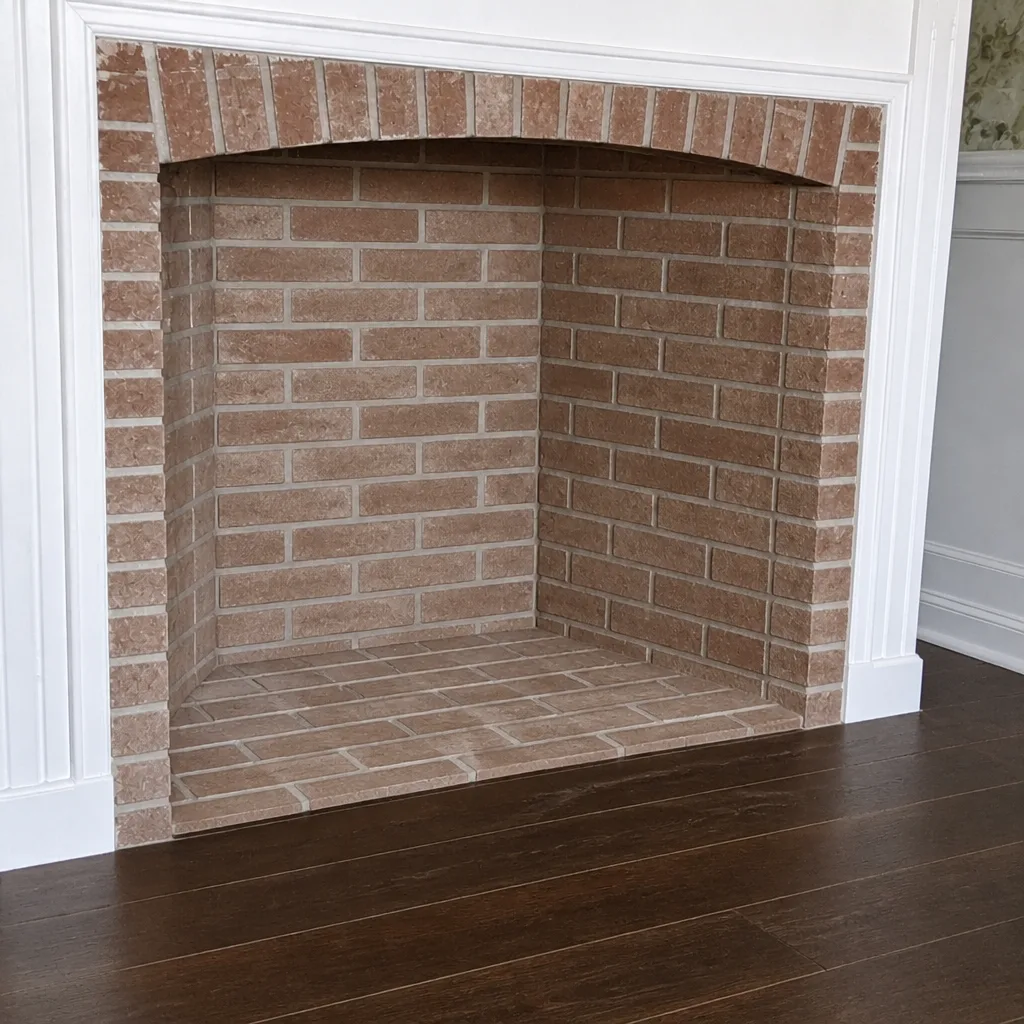 After
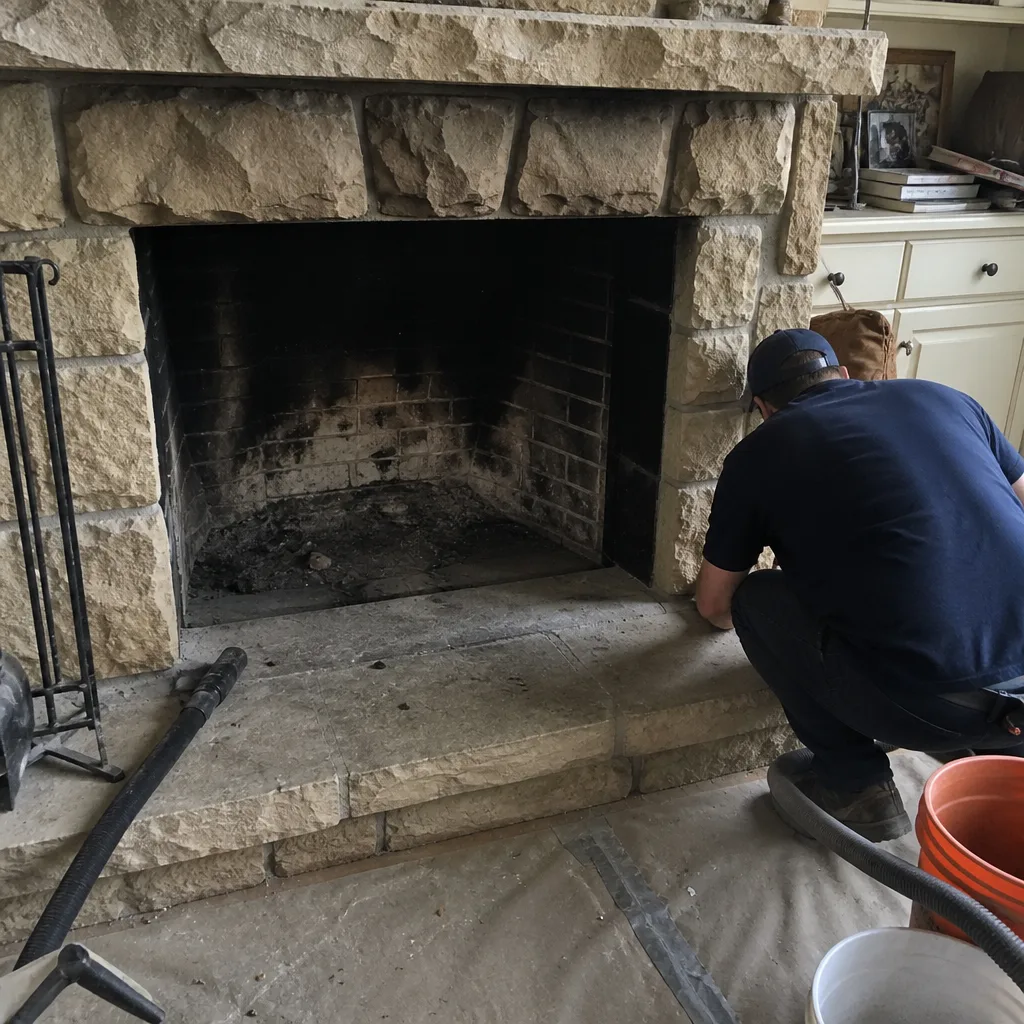 Before
 After
 Before
 After
Frequently Asked Questions
Once a year is the baseline for a wood-burning fireplace used regularly, and more often if you burn a lot through Provo’s cold months. Annual sweeping plus a post-winter visual check in March catches both creosote buildup and freeze-thaw damage. For a rough guide, get it swept before the first fire of the season and inspected for winter damage in spring. Call (866) 937-8214 if you’re not sure when it was last done.
You can safely do the observation tasks: check the cap, crown, flashing, and masonry from the yard with binoculars, shine a flashlight up the flue from the firebox, test the damper, and photograph the liner seasonally. You should not sweep the flue, climb the roof, or attempt any masonry or liner repair yourself. Creosote is flammable, roof access is a fall hazard, and liner cracks can be a fire risk that only a full inspection catches.
The crown is the sloped concrete or mortar top that sheds water off the chimney. It cracks in Provo because water gets into fine cracks, freezes, expands, and widens them across repeated freeze-thaw cycles. A cracked crown lets water into the chimney body, which then damages the masonry and liner below. Cracked crowns are one of the most common repair items we see here, and they’re worth catching early.
A sweep removes creosote and debris from the flue. An inspection evaluates the full system: cap, crown, flashing, liner, smoke chamber, and damper, against NFPA 211 standards. They’re different jobs. A sweep can come back clean while an inspection finds a cracked crown or a failing liner. You want both, done by chimney specialists, not a sweep-only service.
Sometimes it can be restored. HeatShield restoration can resurface a deteriorating clay liner in some cases, which can save you a full replacement. But it depends on the liner’s actual condition, and only an inspection can tell you which path applies. We don’t recommend liner work without showing you the evidence first. Call (866) 937-8214 to get an honest assessment.
Yes, though the rhythm is different. A gas fireplace doesn’t produce creosote the way wood does, but it still has venting, a liner, and a flue that need periodic inspection. The system isn’t maintenance-free just because the fire is cleaner. A visual check and an inspection every year or two keeps it safe, and our Provo Chimney Sweep Pros team can evaluate gas systems alongside wood-burning ones.
The Bottom Line
A Provo chimney checklist is about water and thermal cycling as much as it’s about soot. The cap, crown, flashing, liner, smoke chamber, and damper each fail in their own way, and the freeze-thaw rhythm here makes the crown and mortar the first to go. Check what you can safely check from the yard and the firebox, photograph the liner the same way each season, and let a technician handle the flue and masonry. Do a post-winter check in March and a pre-season check in September, and never skip the annual sweep. From firebox to flue cap, one company that inspects, sweeps, repairs, and caps handles the whole system. Call (866) 937-8214.
Written by the team at Provo Chimney Sweep Pros.